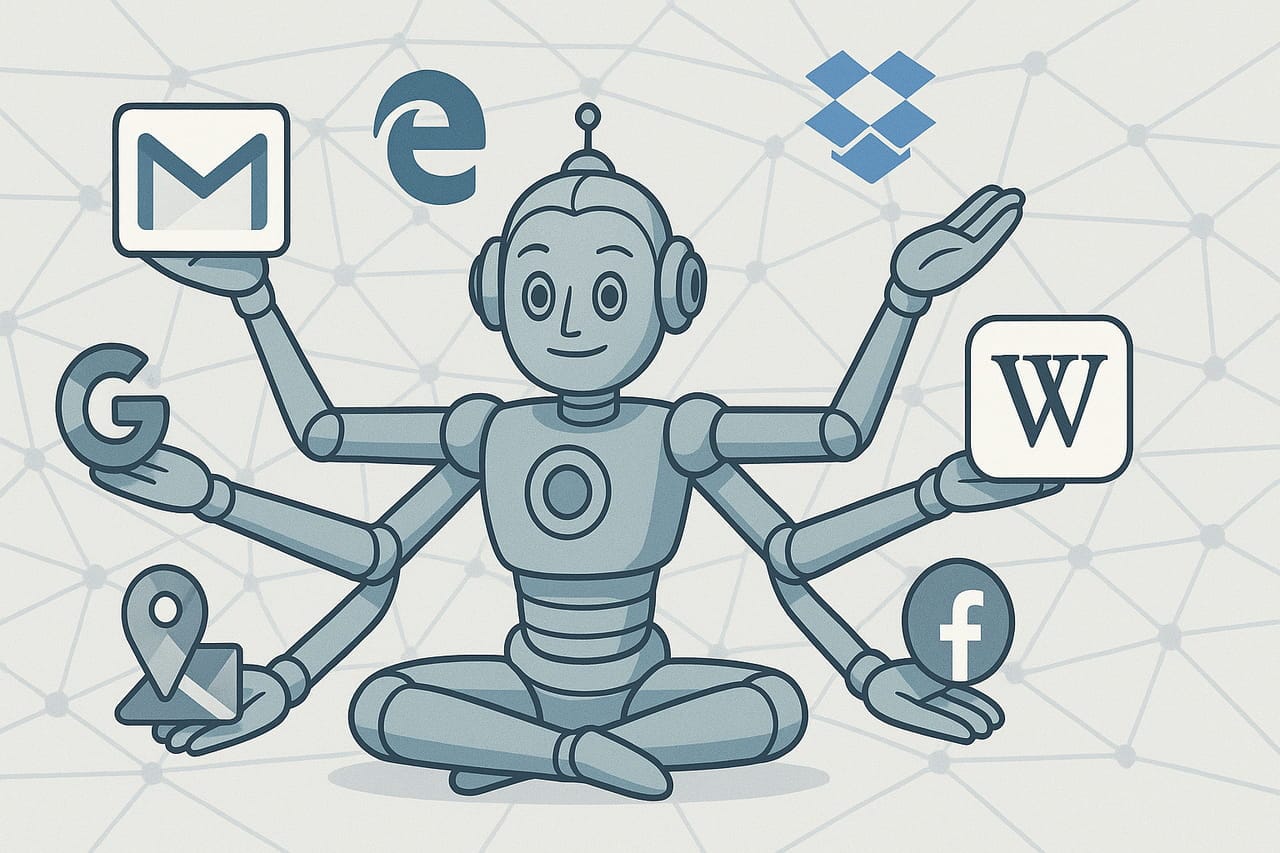
In the ever-evolving universe of software development, artificial intelligence tools are radically transforming our approach to coding. MCP (Model Context Protocol) servers represent a major advancement today for optimizing Claude Code and Gemini CLI, two command-line tools that are revolutionizing developer productivity. These servers enable the activation of active agents, aware of their environment and capable of performing complex tasks with remarkable precision. I am personally convinced that this technology 🚀 will transform the way we design and develop our applications. Thanks to MCP servers, Claude Code and Gemini CLI access real-time updated information, maintain long-term context, and execute tasks in the digital world with unmatched efficiency. This technological revolution fits perfectly into the current trend of intelligent automation that is reshaping the contours of modern development.
📋 Summary
[content h2]
💡 In brief
- Technological revolution: MCP servers transform Claude Code and Gemini CLI into intelligent agents
- Boosted productivity: Real-time access to data, persistent memory, and advanced automation
- Top 5 servers: Filesystem, Sequential Thinking, GitHub, Fetch, and MCP Memory
- Business applications: Improved ROI, optimized workflows, and enhanced competitiveness
- Ease of integration: Simple configuration and extensive compatibility with existing tools
The Fundamentals of MCP Servers
The Model Context Protocol represents a major technological advancement that reshapes the architecture of AI-assisted development tools. These servers act as intelligent bridges between Claude Code or Gemini CLI and the development environment, creating a coherent and efficient ecosystem. Unlike traditional solutions, MCP servers allow for smooth bidirectional communication, where the agent can not only receive instructions but also actively query its environment to make informed decisions.
The MCP architecture is based on three fundamental components: the MCP client (Claude Code or Gemini CLI), the MCP server itself, and the external resources it accesses. This modular structure ensures a clear separation of responsibilities while maintaining seamless integration. Developers thus benefit from maximum flexibility to customize their environment according to their specific needs, without compromising security or performance.
Security is a central pillar of the MCP architecture. Each server operates in a controlled environment, limiting access to only authorized resources. This “sandbox” approach prevents unauthorized access while allowing agents to perform complex tasks securely. Comprehensive logging of actions provides total traceability, essential for demanding professional environments.
The interoperability 🔗 between different MCP servers opens up endless possibilities for combinations and optimizations. Developers can orchestrate multiple servers simultaneously, creating sophisticated workflows that leverage the specific strengths of each component. This modularity also facilitates maintenance and updates, with each server able to evolve independently without impacting the entire system.

Top 5 Essential MCP Servers
The Filesystem server positions itself as the fundamental tool for secure file manipulation. It allows reading, writing, and organizing files directly from the command-line interface, eliminating tedious copy-pasting between the terminal and editor. Its granular configuration allows for precise control of permissions, ensuring that the agent can only access explicitly authorized directories. This secure approach reassures teams while unleashing their creative potential.
Sequential Thinking revolutionizes the approach to complex problems by breaking them down into manageable subtasks. This server analyzes the initial request, identifies critical steps, and proposes a structured action plan. The user retains total control by validating each step, creating a balanced human-machine partnership. This methodology significantly improves the quality of deliverables while reducing the risk of errors.
The GitHub server transforms repository management into a smooth and intuitive experience. It provides an instant overview of projects, analyzes potential issues, and can even propose autonomous code modifications. Integration with the GitHub API ensures perfect synchronization, while advanced analysis features help identify bottlenecks and optimize performance. This holistic approach to code management 📊 greatly enhances team collaboration.
Fetch acts as a secure bridge to the outside world, allowing for real-time retrieval and analysis of web content. Its sandbox architecture prevents uncontrolled access while offering maximum flexibility for network requests. Developers can thus integrate external data, conduct technology watch, or test APIs without leaving their development environment.
Finally, MCP Memory provides persistent memory to agents, allowing them to remember conversations and user preferences. The add, search, and delete commands offer granular control over stored information. This memory capability transforms one-time interactions into a true long-term partnership, where the agent learns and gradually adapts to each developer’s work habits.
Optimized Installation and Configuration
Installing MCP servers follows a standardized methodology that ensures rapid and reliable implementation. The first step is to install Node.js and Gemini CLI via the command npm install -g @google/gemini-cli. With this technical foundation established, configuration is primarily done through the settings.json file, the true control center of the MCP environment. I highly recommend backing up this file before any modifications, a practice that avoids many inconveniences.
Secure configuration requires special attention to permissions and access tokens. For the GitHub server, for example, generating a personal token with the minimum necessary rights adheres to the principle of least privilege. This security approach, while requiring an initial extra effort, prevents potential vulnerabilities and strengthens team confidence in adopting these tools.
Optimizing performance involves configuring according to the intended use. Frequently used servers benefit from higher resource allocation, while occasional tools can operate with more conservative settings. Monitoring logs allows for quick identification of bottlenecks and adjustment of configuration accordingly. This iterative approach ensures an optimal balance between performance and resource consumption.
Functional validation is the crucial final step of the installation. Each server must be tested individually via the /MCP command to verify its availability and proper functioning. Integration tests between servers reveal any configuration or resource conflicts. This validation phase, although time-consuming, prevents production malfunctions and ensures an optimal user experience. The time investment during this phase translates into considerable productivity gains 🚀 later on.
Marketing and Business Applications
MCP servers transcend the simple technical framework to become true levers of competitiveness in today’s business environment. The intelligent automation they enable frees development teams from repetitive tasks, allowing them to focus on innovation and value creation. This reallocation of human resources towards higher value-added activities directly translates into improved ROI for development projects.
In the field of digital marketing, MCP servers open up new perspectives for campaign automation and predictive analysis. The Fetch server allows for real-time monitoring of market trends, brand mentions, or competitive performance. This automated monitoring feeds marketing strategies with fresh and relevant data, significantly improving the responsiveness and accuracy of commercial actions. Integration with existing marketing AI tools creates a powerful and coherent ecosystem.
Project management greatly benefits from the structured approach of the Sequential Thinking server. The automatic breakdown of complex projects into manageable tasks improves planning and reduces the risk of overruns in time or budget. Teams can thus deliver more predictable and higher-quality projects, enhancing customer satisfaction and the company’s reputation. This methodical approach particularly appeals to demanding clients who value transparency and rigor.
The impact on training and onboarding of new recruits should not be underestimated. The MCP Memory server allows for capitalizing on accumulated experience, creating a living and accessible knowledge base. New developers can thus ramp up their skills more quickly, reducing training costs and accelerating their productive contribution. This optimization of human resources 🎆 constitutes a decisive competitive advantage in a market where technical talent is scarce and sought after. I am convinced that companies mastering these tools will gain a significant edge over their competitors.
Conclusion
MCP servers undoubtedly mark a major turning point in the evolution of AI-assisted development tools. Their ability to transform Claude Code and Gemini CLI into true intelligent partners opens up new perspectives for innovation and productivity. The modular and secure architecture of these servers meets the strictest requirements of professional environments while offering maximum flexibility for adaptation to the specific needs of each team.
Adopting this technology is not just a simple technical improvement, but a true strategic investment for the future. Companies that integrate MCP servers into their development workflows today gain a decisive advantage over their competitors. This digital transformation, while requiring an initial effort of learning and configuration, quickly translates into tangible gains in quality, timelines, and customer satisfaction.
I am personally convinced that we are witnessing the beginnings of a revolution that will fundamentally redefine our approach to software development. MCP servers are just the beginning of a larger ecosystem where artificial intelligence and human expertise harmoniously complement each other. The future belongs to teams that can leverage these synergies to create innovative and high-performing solutions, positioning their organization at the forefront of digital transformation 🌟.