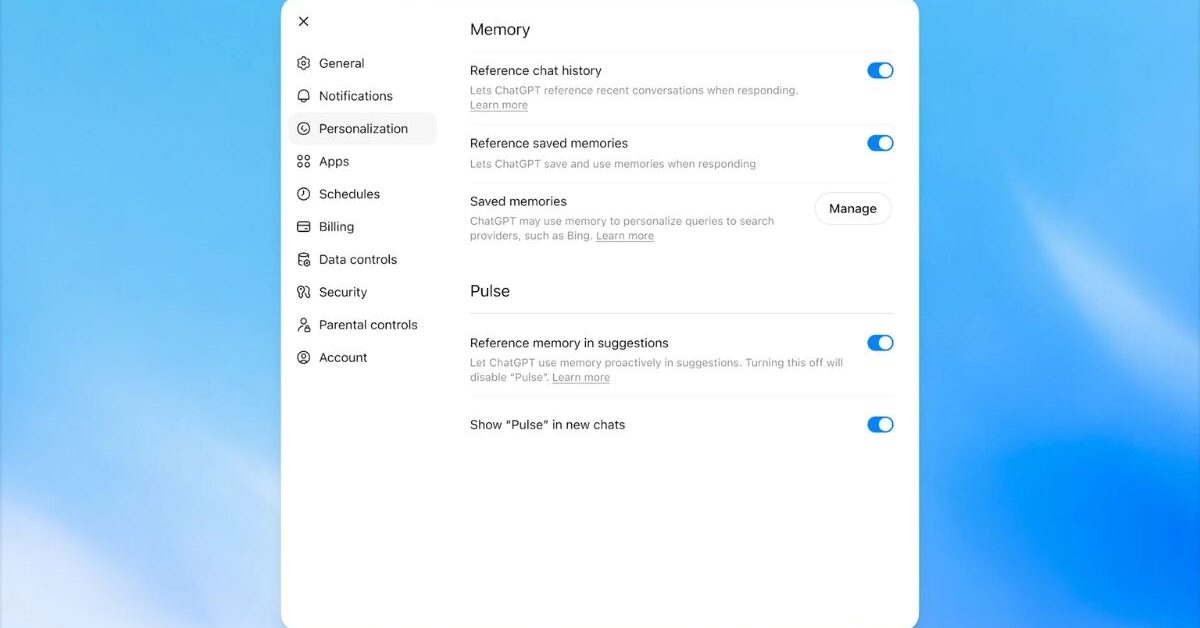
For the past two years, ChatGPT has had a memory feature that allows the assistant to remember your preferences and habits. However, this memory suffered from significant limitations: it quickly became outdated, lacked precision, and struggled to manage information over the long term. OpenAI has just addressed these issues by completely overhauling the underlying architecture with Dreaming V3, an automatic synthesis system that continuously improves. I must admit that this update represents a major turning point in the evolution of conversational AI. Not only does it make ChatGPT smarter and more personal, but it also makes it accessible to all users, including those using the free version. This technological transformation deserves close attention, as it illustrates how AI giants continue to innovate to provide increasingly seamless and tailored experiences for everyone.
📋 Summary
Dreaming V3: The Revolution of Artificial Memory
Before this update, ChatGPT’s memory relied on a hybrid system: on one side, users could manually save memories, while on the other, a mechanism called Dreaming automatically synthesized relevant information. The problem? These two approaches did not really communicate well together. Dreaming V3 unifies all of this by creating a unique and coherent architecture. I consider this unification essential for providing a truly seamless user experience. The system now works in the background, without you needing to do anything. It analyzes your conversations, extracts important elements, and stores them intelligently 🧠 so that ChatGPT can reuse them in your future interactions.
What makes Dreaming V3 truly innovative is its ability to learn and evolve over time. Unlike previous systems that remained static, this new architecture continuously improves. It understands the context of your requests, anticipates your needs, and adapts to your communication style. It’s a bit like having a personal assistant who knows you better and better each day. OpenAI has reduced the computational power required by a factor of 5, allowing this technology to be deployed at scale, even for free users.
The architecture of Dreaming V3 is based on advanced synthesis algorithms that process your data securely and efficiently. OpenAI has invested heavily in research to create a system that is both powerful and resource-efficient. This technical optimization is crucial for ensuring that AI remains accessible to everyone, regardless of their budget or geographical location.

The Three Pillars of Improvement
OpenAI has identified three major issues with the old architecture and resolved them with Dreaming V3. The first pillar concerns context continuity. Previously, you often had to reintroduce yourself to ChatGPT or repeat information you had already shared. This was tiring and unnatural. Now, ChatGPT retains useful elements from one conversation to the next, without you needing to repeat. You can start a new session by simply saying “Hello,” and the assistant will already know who you are and what interests you 💾 thanks to its improved memory.
The second pillar focuses on consideration of preferences. Your personal constraints, dietary preferences, preferred response style, work habits: all of this is now better understood and applied consistently. If you mention once that you prefer short and direct answers, ChatGPT will remember and apply it systematically. This detail makes all the difference in the daily user experience.
The third pillar concerns updating over time. This may be the most important. Previously, if you had a project planned for “next Saturday,” that information remained fixed as such, even after the date had passed. Now, Dreaming V3 understands that time flows and automatically updates your memories. Your upcoming projects, achieved goals, evolving preferences: all of this is intelligently managed by the system.
A Simplified Management Interface
OpenAI understood that the best interface is often the one you don’t need to use. However, for those who want total control, a new memory summary page has been introduced. Accessible from the ChatGPT settings, this page outlines what the assistant has retained: your interests, ongoing projects, response preferences. It’s a bit like checking your personal profile, but for your AI assistant 📝. You can add, modify, or delete information as needed.
What is really convenient is that you can specify the topics that ChatGPT should address or avoid. If you don’t want the assistant to talk to you about certain sensitive topics, you can set that up directly. To delve deeper into a specific point, it’s possible to query the model directly from this interface. It’s a transparent and controlled approach that respects your privacy.
The old list of manually saved memories was difficult to navigate and keep updated. Dreaming V3 replaces this approach with an automatic synthesis that works in the background. You no longer need to worry about maintenance: the system takes care of it for you. This is a significant time saver for users who want a frictionless experience.
Gradual Deployment and Accessibility
OpenAI has announced a gradual deployment of Dreaming V3, which shows a responsible and thoughtful approach. The system is initially available to Plus and Pro subscribers in the United States, with a doubled memory storage capacity. This is a reward for premium users who support OpenAI’s development. The extension to other countries and free accounts will occur gradually over the coming weeks 🌍.
What really impresses me is that OpenAI has drastically reduced computing costs to make this technology accessible to everyone. Free users will benefit from Dreaming V3 in the coming weeks, demonstrating OpenAI’s commitment to accessibility. This is a smart strategic decision that strengthens OpenAI’s position in the AI market.
The gradual deployment also allows OpenAI to monitor and optimize the system in real-time. If issues arise, they can be resolved quickly without affecting all users simultaneously. This is a deployment approach that has proven effective in the tech industry and ensures a stable experience for everyone.

Impact on User Experience
Dreaming V3 fundamentally transforms the way we interact with ChatGPT. Instead of having a transactional relationship with the assistant, we now develop a continuous and personalized relationship. Each conversation enriches ChatGPT’s memory, making subsequent interactions more relevant and useful. It’s a bit like having a friend who knows you better and better 🤝 with each conversation you have together.
For professionals, this improvement is particularly valuable. You can configure ChatGPT to understand your area of expertise, your clients, your ongoing projects. The assistant then becomes a true AI agent capable of assisting you coherently and effectively. I can already see how automation tools will be able to leverage this improved memory to create even smarter workflows.
On a personal level, Dreaming V3 makes ChatGPT more intuitive and less frustrating. You no longer need to repeat the same information or re-explain your context. The assistant understands your situation and can offer you tailored solutions. This is a real productivity gain that accumulates over time.
Conclusion
Dreaming V3 represents a major turning point in the evolution of ChatGPT and conversational AI in general. OpenAI has resolved the three main flaws of the old architecture: the obsolescence of memories, their inaccuracy, and the difficulties of long-term management. I am convinced that this update will change the way people use ChatGPT on a daily basis. The improved memory makes the assistant more personal, smarter, and more useful. This is an evolution that benefits all users, from beginners to experts.
What truly excites me is the accessibility. By making Dreaming V3 available to free users, OpenAI demonstrates its commitment to AI accessibility. This is a decision that strengthens trust in the company and opens new possibilities for millions of users worldwide. The future of conversational AI is clearly more personal and tailored to each individual.
📝 In Brief
- Dreaming V3 unifies ChatGPT’s memory into a unique and coherent architecture that improves over time
- The three pillars of improvement are context continuity, consideration of preferences, and automatic updating over time
- A new memory management interface allows users to see and control what ChatGPT knows about them
- The gradual deployment makes Dreaming V3 accessible to all users, including those using the free version