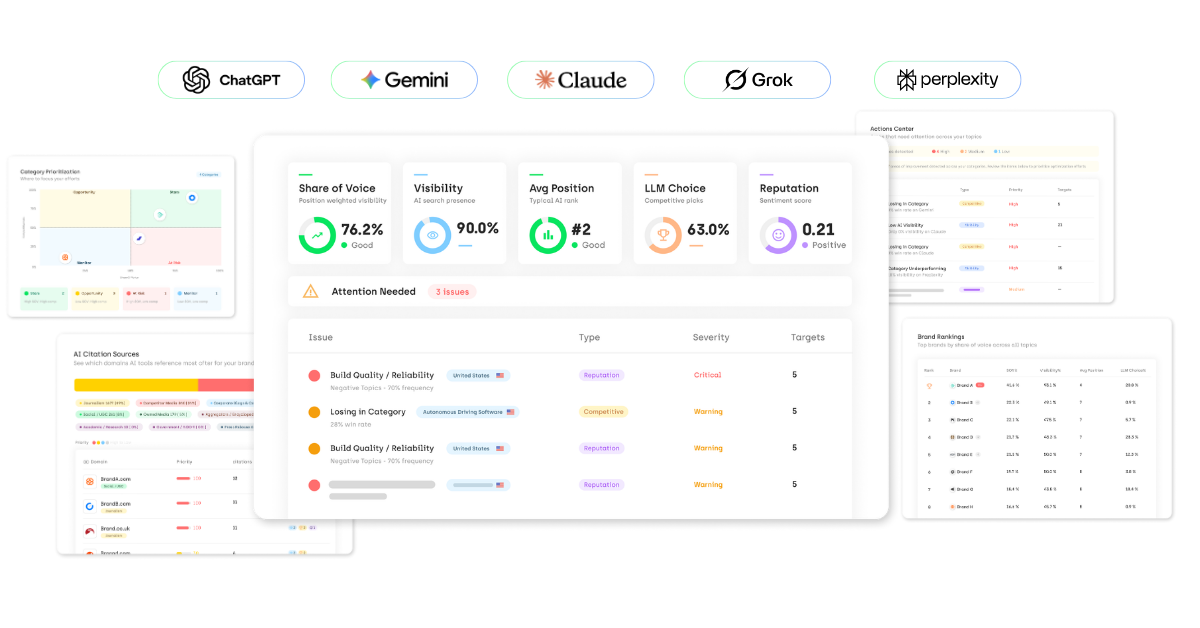
For decades, CRM has functioned as a simple passive archive: a ledger where contacts, histories, and sales stages piled up. You entered the data, interpreted it, and acted. Today, this mechanism is completely reversed. Generative AI and agentic architectures are redefining what a CRM can do, but not with a magic wand. I must be honest: there is a great blur between what actually exists in production, what is emerging in the short term, and what remains purely prospective. Confusing these three horizons is selling dreams rather than clarity. This article decodes this mutation by separating the reality of mature copilots, the promises of semi-autonomous agents, and the myths of large-scale autonomous orchestration. You will discover why true value lies less in technology than in human governance, and how organizations that master this nuance create a sustainable competitive advantage.
📋 Summary
The Three Technological Bricks Not to Confuse
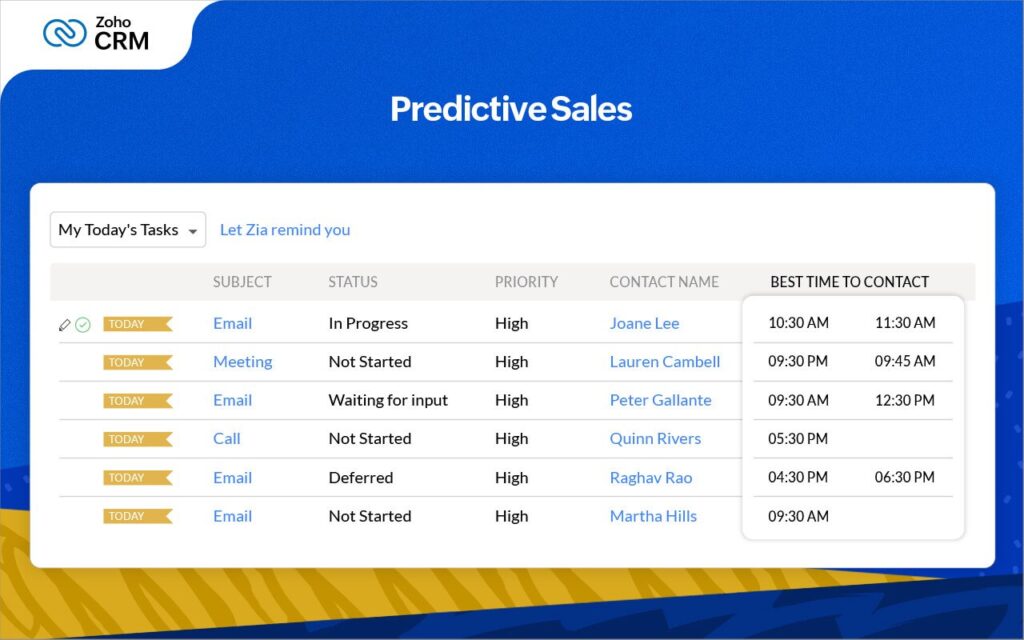
The great blur in the current discourse on AI in CRM comes from a conflation of three technologies with very different maturities. The predictive scoring based on classic machine learning has existed for years. It scores a lead, predicts a churn risk, and operates relatively reliably. It is the most mature brick, the one that can be deployed without major concerns. 🎯 Sales teams use it daily to prioritize their efforts.
Generative AI represents the second brick. It drafts emails, summarizes calls, synthesizes client accounts. It is powerful, but it can hallucinate a number or distort a client’s tone. It is a rapidly maturing technology, but it requires constant human supervision. I have seen it transform team productivity, but also create disasters when left unchecked.
Autonomous agents constitute the third brick, the youngest and most fragile. These are systems capable of chaining tool calls and triggering actions autonomously. They concentrate both the most promises and the most risks. Selling these three bricks as a single homogeneous block already betrays a lack of technical perspective.
What Exists Already in Production Versus What Remains Prospective
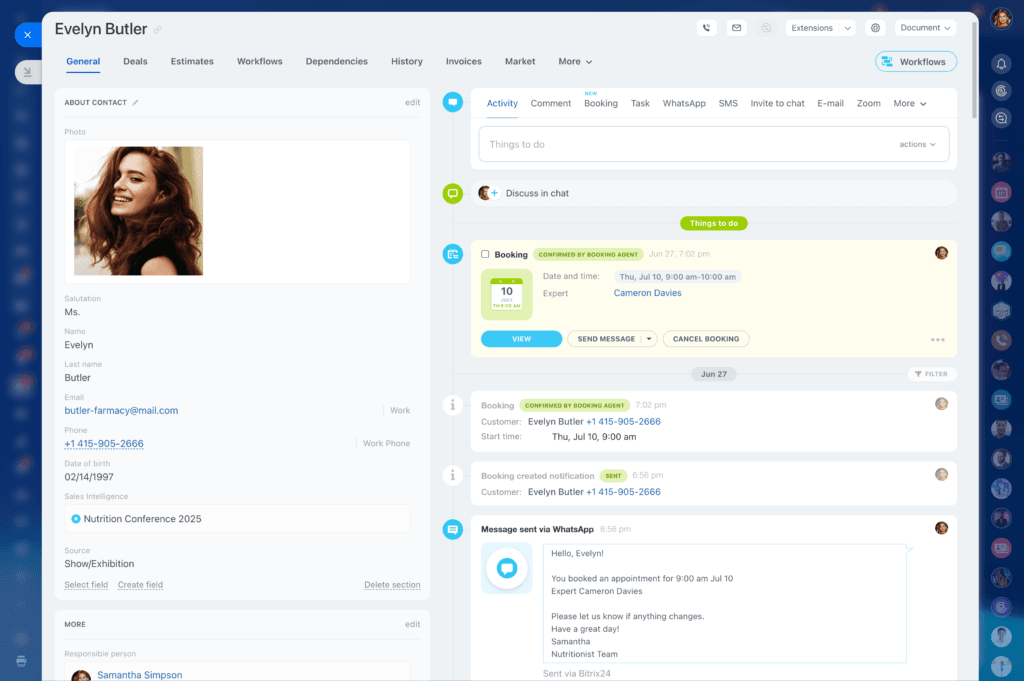
Today, in actual production, we see mature copilots that draft emails and summarize calls. Microsoft Copilot for Sales and Salesforce Einstein are widely deployed examples in organizations. The gain is real, and human supervision is systematic. Salespeople retain total control. It is an augmentation, not an automation.
In the short term, within 1 to 2 years, we will see the emergence of semi-autonomous agents that trigger a sequence, follow up with a prospect, alert on a churn risk. But with human validation before any action with real consequences. 🚀 Salesforce Agentforce and HubSpot Breeze are moving in this direction, with results still uneven depending on the quality of input data. I am cautious about these promises: I have seen too many projects fail due to poor data.
Beyond that, it is prospective: large-scale autonomous orchestration, across thousands of accounts simultaneously, without systematic validation. This is the most spectacular vision, and the least supported today by real deployments at this scale. Presenting these three horizons as a single timeless present is selling dreams rather than clarity.
From Manual Capture to Intelligent Anticipation
The abolition of manual entry is real and observable. The automatic capture of emails, calls, and meetings frees teams from administrative burdens. But this promise has a rarely stated prerequisite: the quality of CRM data upstream. An agent orchestrated on dirty data does not automate sales; it automates error on a larger scale and faster than a human could.
As for the anticipation of purchase intent from weak signals, it raises a question that technological enthusiasm often overlooks: how far can we process behavioral and contextual signals on an individual before stepping outside the GDPR framework? 📊 The answer is not the same when discussing declarative data versus inferred signals. It is a gray area that few organizations have truly clarified.
I recommend a gradual approach: start by cleaning your existing data, then deploy drafting copilots, and only then consider semi-autonomous agents with human validation. Skipping steps prepares you for technological disappointments.
Governance: The Real Issue Behind Technology
The idea that AI coordinates mini-scenarios at the scale of thousands of accounts is appealing. It becomes dangerous without clear governance. Who validates an autonomous action before it is triggered? What traceability allows us to understand why an agent decided to alert or not alert a manager on a strategic account? These questions are not technical; they are organizational.
This is where the term “explainable” deserves to be handled with care. The explainability of modern AI systems, particularly those that combine LLM and decision-making, remains an open field, not an acquired one. A system that explains its recommendation by generating a plausible justification afterward is not the same as a system whose decision logic is genuinely auditable. 🔍 The nuance is technical, but it has direct business consequences: a salesperson correcting a bad score based on a false explanation corrects nothing at all.
I recommend investing in CRM governance before investing in agents. Define who decides, on what criteria, with what traceability. It is less sexy than talking about autonomous AI, but it is infinitely more useful.
The Augmented Salesperson: A Redefined Role, Not Eliminated
By delegating execution and mass personalization to agents, AI redefines the role of the salesperson. Less data entry operator, more nuance strategist and complex negotiator. This shift is real and already observable in organizations that have adopted mature copilots. The salespeople I have met in these organizations all say the same thing: they spend less time on administration and more time on strategy.
But this shift also shifts the responsibility of the manager. It is no longer just about measuring the volume of calls, but auditing the relevance of algorithmic recommendations and mastering their biases. 💼 It is a new role that requires a technical literacy that few sales organizations still possess. Managers must learn to read agent logs, identify biases, and correct trajectories.
Marketing automation and AI management are becoming essential managerial skills. Organizations that invest in training their managers on these topics create a sustainable competitive advantage.
What Remains True, Without Marketing Packaging
The competitive advantage will not come from the ability to push more offers faster. The market is already saturated with solicitations. It will come from an organization’s ability to combine three things simultaneously: clean data, clear governance of what AI is allowed to decide on its own, and humans whose roles have been rethought rather than simply lightened.
It is not a central nervous system that will transform your business overnight. It is a powerful tool, with precise blind spots, and expertise consists precisely in knowing how to name them. 🎯 The organizations that succeed are those that combine technological humility with strategic ambition. They do not believe in the promises of autonomous AI, but they exploit every opportunity for intelligent augmentation.
I am convinced that the agentic CRM will be the norm in 3 years. But this norm will be built by organizations that have taken the time to do things right, not by those that believed in shortcuts.
Conclusion
The agentic CRM is not a revolution that is coming tomorrow. It is a gradual evolution that begins today, with mature copilots, and accelerates with semi-autonomous agents. I am convinced that organizations that master this transition will be those that have invested in governance, data quality, and the redefinition of human roles. Others will remain trapped in marketing promises and technological disappointments.
The real question is not “When will AI replace my salespeople?” but “How will I augment my salespeople with AI while maintaining control and accountability?” It is a less spectacular question, but infinitely more useful for your business.
📝 In Brief
- CRM is evolving from a simple passive archive to an agentic system capable of anticipation and autonomous action
- Three technological bricks coexist: mature predictive scoring, maturing generative AI, prospective autonomous agents
- Human governance and data quality are more critical than the technology itself
- The competitive advantage comes from the intelligent augmentation of salespeople, not their replacement