Today, I need to talk to you about a reality that completely changes the game of digital marketing. You have probably heard of traditional SEO, but do you know that 60% of Google searches end without a single click? Users are getting their answers directly from AI engines like ChatGPT, Gemini, or Claude. This is a major transformation that affects every brand, whether they realize it or not. Imagine: 80% of consumers now rely on AI-generated results for a significant portion of their searches. If your brand does not appear in these AI-generated answers, you are gradually becoming invisible to a growing share of your audience. This is precisely why I decided to explore the concept of GEO (Generative Engine Optimization) in depth. This is not just a passing trend; it is a fundamental evolution in how people discover brands and products. In this article, I will show you how to navigate this new frontier and transform your visibility strategy to remain competitive in the AI era.
📋 Summary
Understanding the Transformed Search Landscape
The search landscape has fundamentally changed, and I must admit that many marketing professionals still do not realize the extent of this transformation. Once, traditional SEO was the undisputed king. You optimized your content for Google, built backlinks, and waited to see your site climb the rankings. But today, AI engines 🤖 are completely changing the rules of the game. These systems do not simply rank web pages; they generate complete answers based on data from multiple sources. This is a crucial difference that requires an entirely new strategic approach.
What really fascinates me is that 60% of Google searches now end without a click. Users get their answers directly in the search interface, often powered by AI. This means that even if you are in the top position on Google, you might not receive traffic if your content is not cited in the AI-generated answer. This is a humbling reality for many marketers who have heavily invested in traditional SEO.
As a marketing professional, I have realized that we now need to think on two different levels: first, how to appear in AI-generated answers, and secondly, how to maintain our traditional visibility. It’s a challenge, but it’s also an opportunity for those who act quickly. GEO represents this new frontier of digital marketing.
The Crucial Role of Editorial Content and Earned Media
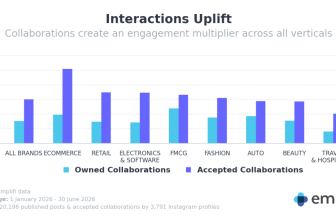
Here’s something I discovered that really changes the game: AI engines do not create content ex nihilo. They rely on existing, validated, and authorized content. In fact, research shows that 61% of all AI-generated answers contain citations from editorial media or earned content. This is a fundamental discovery that has completely reoriented my content strategy. This means that your earned media strategy 📰 is now more important than ever.
Think about it: if you want your brand to be recommended by ChatGPT or Gemini, you must first be cited in quality publications. This is a major paradigm shift. Instead of focusing solely on optimization for Google’s algorithms, you now need to ensure that your content is mentioned in authoritative sources. I call this “fuel for AI visibility.” Your public relations strategy becomes directly linked to your visibility in AI engines.
What I have learned from working with different brands is that companies that succeed in this new environment are those that combine an excellent content strategy with a strong media presence. You cannot rely solely on traditional SEO or only on public relations. You need both, worked together in a strategic and coordinated manner.
Identifying Your “Visibility Gap”: The Invisible Problem
Here’s the problem I observe in most companies: they do not know what AI engines are actually saying about their brand. This is what I call the “Visibility Gap.” You might have a stellar SEO strategy, an active presence on social media, and excellent earned media coverage, but when someone asks ChatGPT, “Who are the best providers in my industry?”, your brand might not appear at all. This is a measurement problem 📊 that most companies cannot solve with traditional tools.
Until recently, there was no way to measure this “black box” of AI visibility. You could see your Google ranking, your organic traffic, your mentions on social media, but you could not see how AI engines were positioning you. This is a critical gap in the visibility strategy of almost every company. I realized that without this visibility, you cannot effectively optimize your AI presence.
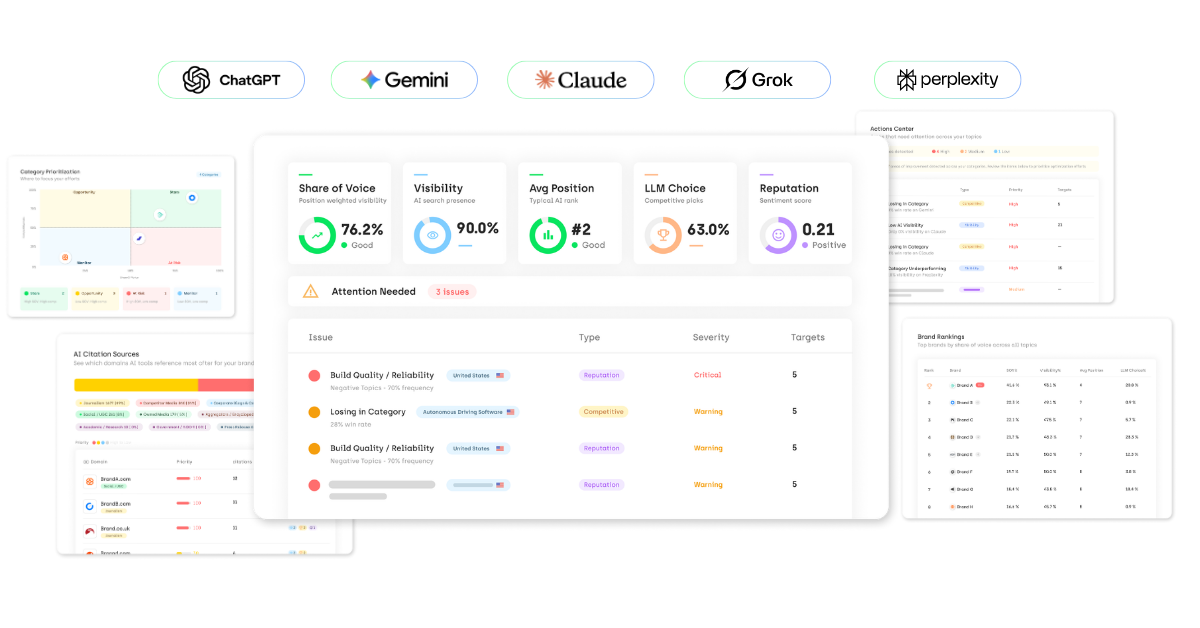
What fascinates me is that this “black box” can now be opened. There are tools that allow you to track your Share of Voice in AI engines, your average position, your sentiment, and many other metrics. This completely changes the game for companies that really want to master their visibility in the AI era.
Monitoring the Big 5: ChatGPT, Gemini, Grok, Claude, and Perplexity
When I talk about the “Big 5,” I am referring to the five most influential AI engines currently: ChatGPT, Gemini, Grok, Claude, and Perplexity. These platforms are not just search tools; they are brand discovery interfaces 🔍 that influence millions of purchasing decisions every day. Each of these engines has its own characteristics, its own data sources, and its own way of generating answers.
What really surprised me while studying these platforms is that they do not generate the same answers for the same question. ChatGPT might recommend one brand, while Gemini recommends another. This is why it is crucial to monitor your Share of Voice on each of these platforms separately. You cannot assume that if you are well-positioned on ChatGPT, you are also well-positioned on Gemini.
As a marketing professional, I have learned that monitoring these five engines requires a systematic approach. You need to track your visibility, average position, and sentiment on each platform. It’s an ongoing job, but it is absolutely essential to remain competitive in the new search ecosystem.

Identifying Priority Sources: The Secret of GEO Optimization
Here’s the secret I discovered: AI engines do not cite all sources equally. Some publications, some domains, and some content formats are cited much more frequently than others. This is what I call the “priority sources” 🎯. Identifying these sources in your industry is key to optimizing your AI visibility.
Imagine being able to see exactly which publications, which domains, and which content formats AI engines cite most often in your category. You could then focus your public relations and content efforts on these specific sources. This is a data-driven approach that replaces guesswork and intuition. I have seen companies increase their AI visibility by 300% simply by focusing on the right sources.
What really fascinates me is that this information was previously hidden. Now, with the right tools, you can see exactly what the most influential sources are for your industry. You can create a list of public relations targets based on real data, rather than assumptions.
Building Your GEO Strategy: From Measurement to Action
Now that you understand the landscape, how do you actually build an effective GEO strategy? This is where many companies get lost. They know they need to do something, but they do not know where to start. As a marketing professional, I have developed a five-step process that really works. First, you need to measure your current visibility 📈 in AI engines. This means auditing your presence on the Big 5 and identifying your Visibility Gap.
Second, you need to identify your priority sources. Which publications, which domains, and which content formats do AI engines cite most often in your industry? This is your list of public relations targets. Third, you need to develop a content plan aligned with these sources. This means creating content that is not only good for traditional SEO but also appealing to journalists and editors.
Fourth, you need to execute your public relations strategy systematically. This means reaching out to the right publications, pitching interesting stories, and building long-term relationships. Finally, you need to measure your results and adjust your strategy accordingly. It’s an iterative process that requires patience and perseverance.
Transforming AI Visibility into Competitive Advantage
What really excites me about GEO is that it is an opportunity for companies that act quickly. Many of your competitors do not yet understand the importance of AI visibility. They continue to focus solely on traditional SEO and social media. This is a major mistake. By mastering GEO now, you can build a sustainable competitive advantage 🏆 that will be hard to catch up to.
Imagine being the brand that ChatGPT always recommends when someone asks, “Who are the best providers in my industry?” That’s the dream of every marketing professional. And it is achievable if you build a solid GEO strategy. You must first understand that AI visibility is now a key element of your overall marketing strategy.
As a marketing professional, I have seen how companies that master GEO gain a significant market advantage. They receive more leads, build a better brand reputation, and generate more revenue. It’s an investment in AI and data science that is truly worth making now, before the competition catches up.
Conclusion
GEO is not a passing trend; it is the future of digital marketing. AI engines are transforming how people discover brands, and companies that do not adapt risk becoming invisible. I have seen this transformation unfold in real-time, and I can tell you with certainty that companies that act now will have a significant advantage. The good news is that GEO is not as complicated as many think. It’s simply a matter of understanding how AI engines work, identifying your priority sources, and building a content and public relations strategy aligned with those sources.
My personal advice: start by auditing your current visibility in AI engines. See where you are now, identify your Visibility Gap, and develop an action plan. Don’t let this opportunity slip away. The future of digital marketing is here, and it’s time to adapt.
📝 In Brief
- 60% of Google searches end without a click, with users getting their answers directly from AI
- 61% of AI-generated answers contain citations from editorial media or earned content
- The “priority sources” in your industry are cited much more frequently by AI engines than others
- GEO requires an integrated approach combining traditional SEO, public relations, and content strategy