Faced with the multitude of tools available in the MarTech market, choosing a marketing automation and customer relationship management (CRM) platform often represents a major strategic and financial puzzle for businesses. Navigating between promises, complex pricing plans, and required integrations can quickly become a source of costly errors. That’s why I decided to dive into the details of two essential platforms, HubSpot and ActiveCampaign, to separate fact from fiction. These two solutions dominate the sector, but with radically different philosophies and pricing structures.
The goal of this analysis is simple: to help you determine which solution, the all-in-one HubSpot suite or the targeted power of ActiveCampaign, best fits your specific context, budget, and growth objectives. I will compare these giants based on objective criteria to ensure an informed choice, aiming for maximum organic traffic on the most strategic comparison queries.
🔄 [Updated on October 2026]
HubSpot: The All-in-One CRM Suite
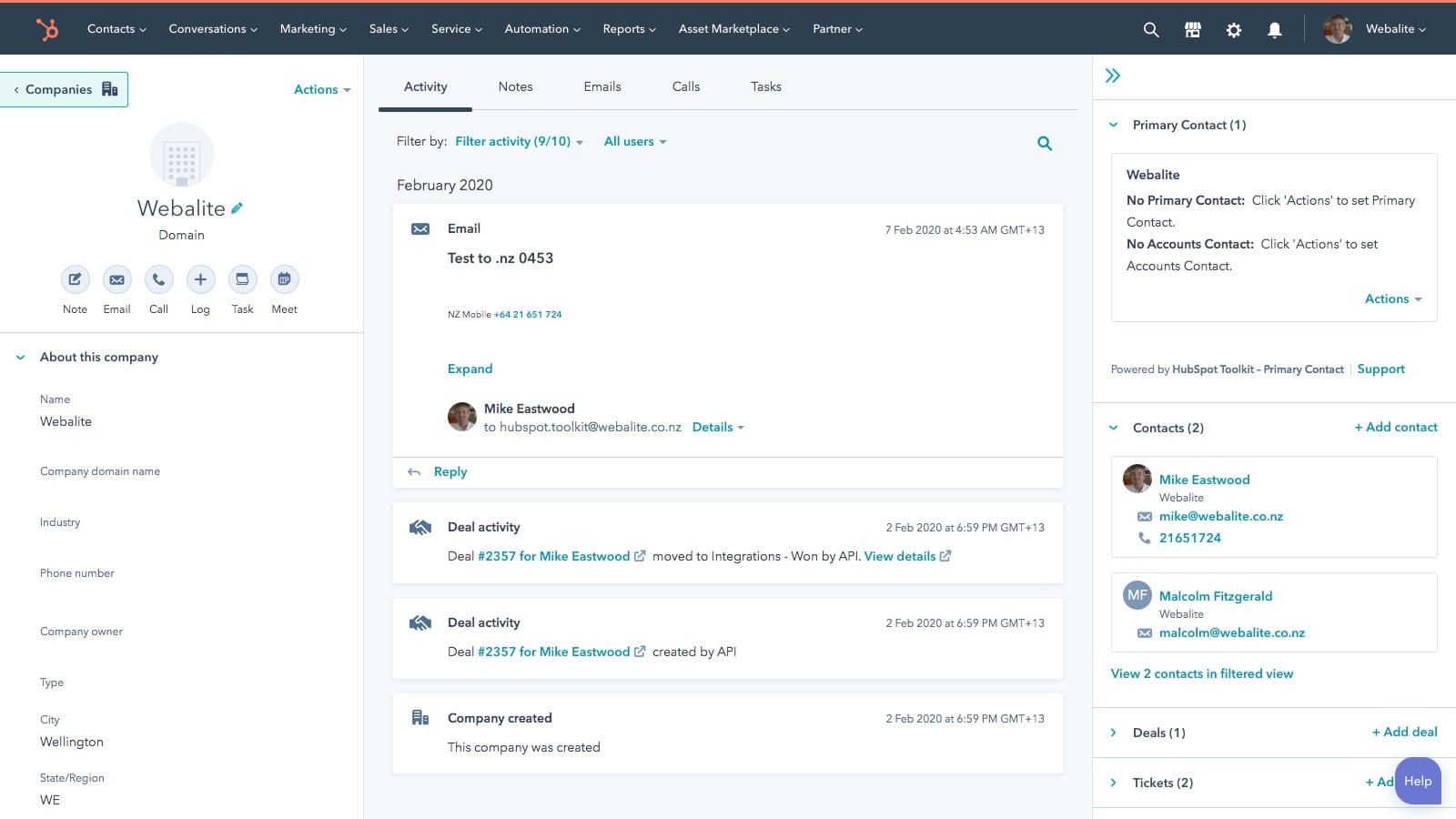
HubSpot is much more than just a marketing automation tool. It is a comprehensive CRM platform, structured around “Hubs” (Marketing, Sales, Service, CMS, Operations, Commerce) that work in synergy. Its approach is firmly based on the philosophy of Inbound Marketing, aiming to attract, convert, and retain customers naturally.
Strengths of HubSpot
- Unified Ecosystem: The CRM is free and serves as the foundation for all Hubs. This native integration of Marketing, Sales, and Customer Service teams is its greatest asset.
- Comprehensive Inbound Features: Tools for blogging, SEO, content management (CMS), landing pages, and digital advertising, everything is included (depending on the plan).
- Structured Scalability: The Starter, Professional, and Enterprise plans allow for a step-by-step scaling with governance features and custom objects for large organizations.
- Advanced Reporting and Attribution: Highly customizable dashboards and multi-touch attribution models that clearly link marketing efforts to revenue.
- Extensive Integration Marketplace: Over 1,400 high-quality native integrations.
Weaknesses / Limits of HubSpot
- Exponential Cost: The price rises very quickly, especially at the Professional and Enterprise levels, and includes often high mandatory onboarding fees.
- Limitation on Email Sends: The monthly email sending volume is often limited (for example, 5 to 10 times the number of marketing contacts), which can be restrictive for large campaigns.
- Complexity for Beginners: Although the interface is clean, the extent of features can lead to a steep learning curve to master the entire suite.
- Less Specialized Emailing Features: Pure emailing tools, while robust, do not always compete with the deliverability finesse or segmentation granularity of a specialist like ActiveCampaign.
Ideal Target Audience: Companies (SMEs, ETIs, Large Enterprises) looking for structured growth and needing a unified CRM platform to closely align marketing, sales, and service teams.
Detailed Analysis Criteria for HubSpot
Key Features
HubSpot’s Marketing Hub stands out for its very broad spectrum. It offers, starting from the Professional plan, powerful multi-channel automation workflows that cover email, social media, advertising, and CRM. The tools include predictive lead scoring, integrated SEO, ad management, and advanced content personalization options (Smart Content) for pages and emails.
Ease of Use and UX (User Experience)
HubSpot’s interface is known for its modern design and ergonomics. Everything is centralized around a unique contact record. However, this ease of access can be misleading: the initial setup of complex workflows, custom reports, or object properties may require the intervention of a partner or extensive training, which partly justifies their onboarding fees.
Pricing and Plans (Marketing Hub)
HubSpot’s pricing is based on the number of marketing contacts (those you can target via email or automation) and the level of functionality of the Hub.
- Starter (From ~20-25 €/month for 1,000 contacts): Offers email marketing, forms, live chat, ad management, and some basic automation. It’s an excellent starting point for an SME.
- Professional (~800 €/month for 2,000 contacts, + onboarding fees): The level that unlocks the power of HubSpot. Access to complete automation workflows, dynamic landing pages, blogging and SEO, as well as attribution reports.
- Enterprise (~3,600 €/month for 10,000 contacts, + onboarding fees): Adds enterprise governance, unlimited custom fields and objects, advanced predictive scoring, adaptive A/B testing, and ultra-sophisticated reporting tools.
Available Integrations (CRM, Third-Party Tools, etc.)
With over 1,400 applications in its Marketplace, HubSpot offers deep native integration with most leading SaaS tools on the market (Shopify, Salesforce, Zendesk, WordPress, etc.). The advantage is the quality of the two-way synchronization, often more reliable and less dependent on intermediary tools like Zapier than its competitor.
Quality of Customer Support and Resources
HubSpot’s support is progressive. Starter plans offer help via chat and email, but phone support and dedicated account management are generally only available from the Professional plan. The knowledge base (Academy, blog, documentation) is, however, one of the richest in the industry, offering free resources in French.
Compliance and GDPR (Data Management, Consent, Hosting)
HubSpot takes GDPR very seriously. It offers native tools for consent management (cookies, subscriptions), data anonymization, the right to be forgotten (Right to be Forgotten), and encryption. Its data centers are well documented, and the platform allows for clear data governance rules to be defined.
AI Features
HubSpot integrates AI through its Breeze AI suite (and the Breeze Copilot). These features are highly focused on efficiency:
- Content Generation: Writing emails, subjects, meta descriptions, and social posts.
- Predictive Analysis: Lead scoring, content recommendations, and sales forecasting tools.
- Customer Assistance: Intelligent Chatbot agents that can answer questions and create tickets automatically.
ActiveCampaign: The Power of Precision Automation
ActiveCampaign is a specialist, globally recognized for its top-notch marketing automation engine. Although it now offers a CRM (Sales CRM), its core business remains building highly personalized customer experiences, primarily through emailing and SMS/chat channels.
Strengths of ActiveCampaign
- Ultimate Automations: Its workflows are extremely flexible, powerful, and easy to visualize, allowing for the creation of complex scenarios based on customer behavior (page visits, purchases, tags).
- Advanced Segmentation: The tagging and segmentation tools are best in class, allowing for extremely granular personalization of the customer experience.
- Flexible Pricing: The price is significantly more affordable than HubSpot for an equivalent volume of contacts, and generally does not include mandatory onboarding fees.
- Superior Deliverability: Often cited for its excellent email deliverability, crucial for businesses where email is the primary revenue channel (e-commerce, SaaS).
- Targeted Multi-Channel Automation: Effective integration of site tracking, SMS, and internal messaging.
Weaknesses / Limits of ActiveCampaign
- Less “All-in-One”: The CRM is present, but less rich and less deep than HubSpot’s, often requiring integrations for complex sales needs.
- Fewer Native Inbound Features: It lacks native tools for blogging, SEO, or CMS. You need to integrate with third-party platforms for these aspects.
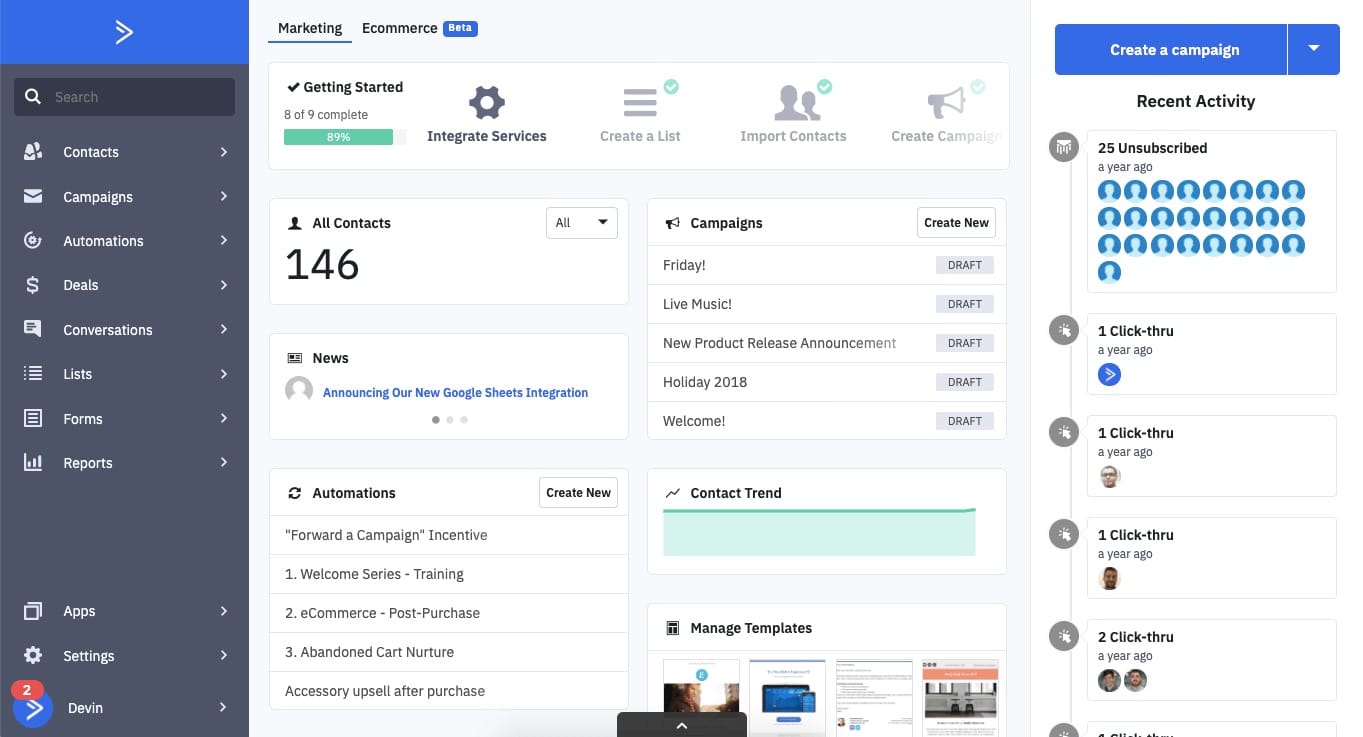
- Less Polished Interface: The user experience is very functional but may seem less intuitive or less “modern” than HubSpot’s suite, with a learning curve focused on automation logic.
- Dependent Integrations: Although it offers over 900 integrations, many rely on connectors or intermediary tools (like Zapier), which requires more maintenance.
Ideal Target Audience: SMEs, micro-enterprises, and e-commerce businesses that heavily rely on email and behavioral automation to generate revenue and need a powerful personalization engine at a competitive price.
Detailed Analysis Criteria for ActiveCampaign
Key Features
ActiveCampaign’s major asset is its visual automation builder (Workflows). It allows for the creation of sophisticated customer journeys including actions based on lead scores (Lead Scoring), purchase history, or engagement. It excels in creating abandoned cart campaigns, hyper-personalized welcome sequences, and lifecycle management.
Ease of Use and UX (User Experience)
The interface is clear, but the power of automation requires a certain rigor. Email editing is functional, but the templates are less sophisticated than those of HubSpot. Where ActiveCampaign shines is in the visualization and editing of workflows, which are extremely quick and intuitive to build.
Pricing and Plans (Marketing Automation)
ActiveCampaign’s pricing is primarily based on the number of contacts and increases proportionally, without the large price jumps of HubSpot. The prices below are indicative for 1,000 contacts, with annual commitment (monthly prices are higher).
- Starter (From ~15 €/month for 1,000 contacts): Ideal for starting, includes forms, email marketing, and basic automation.
- Plus (From ~49 €/month for 1,000 contacts): Unlocks the Sales CRM (sales pipeline), advanced segmentation, third-party integrations, and access to site messaging.
- Professional (From ~79 €/month for 1,000 contacts): Includes predictive scoring, advanced automation split Testing, and marketing attribution tools.
Available Integrations (CRM, Third-Party Tools, etc.)
With nearly 900 integrations, ActiveCampaign covers the essentials. It integrates very well with e-commerce platforms (Shopify, WooCommerce) and tools like Pipedrive, Salesforce (via the Enterprise plan for the most robust native integrations), or Zapier. The sales team can often offer a free or assisted migration.
Quality of Customer Support and Resources
ActiveCampaign is known for the quality of its support, often more accessible from the mid-tier plans. It offers 24/7 chat and email support. Although the knowledge base is comprehensive, it is less focused on the overall “Inbound” strategy than HubSpot’s.
Compliance and GDPR (Data Management, Consent, Hosting)
ActiveCampaign is also GDPR compliant. It offers tools for managing unsubscribes, consent, data deletion, and security features (like two-factor authentication). Data management settings and hosting options are documented for Europe.
AI Features
ActiveCampaign uses AI under the name Active Intelligence. Its strengths lie in performance optimization:
- Predictive Sending: Optimizes the sending time of emails for each individual contact to increase open rates.
- Predictive Segmentation: Identifies contacts most likely to buy, unsubscribe, or engage.
- Dynamic Content: Uses behavioral data to inject highly personalized content blocks into emails and on the site.
How to Choose Between HubSpot and ActiveCampaign?
<!– wp:rank-math/howto-block {"description":"Choosing the right MarTech platform is a strategic decision that should be guided by your specific needs, resources, and long-term vision. I propose a step-by-step approach to help you make the best decision between HubSpot and ActiveCampaign.","steps":[{"id":"howto-step-1763166755771","title":"Step 1: Assess Your Fundamental Needs","content":"Unified CRM or Targeted Automation?HubSpot is ideal if you are looking for a centralized platform where your marketing, sales, and customer service operate in a unique ecosystem. It is the ultimate “all-in-one” solution.
ActiveCampaign excels if your priority is ultra-fine and high-performing marketing automation (and emailing), with a customer relationship management that relies on these automations. Its CRM is functional but less deep.
Inbound Strategy or Behavioral Campaigns?
If your strategy heavily relies on content (blogging, SEO, landing pages) to attract prospects, HubSpot offers the necessary native tools.
If your focus is on responsiveness to user behaviors (page visits, purchases, clicks) to trigger personalized actions, ActiveCampaign is the master of behavioral automation.”,”visible”:true},{“id”:”howto-step-1763166858776″,”title”:”Step 2: Define Your Budget and Scalability”,”content”:”Consider the total cost of ownership (TCO).
HubSpot may seem expensive at first, especially with mandatory onboarding fees for advanced plans. However, this can be offset by the absence of multiple subscriptions to manage and costly third-party integrations.
ActiveCampaign is generally more affordable for an equivalent number of contacts, and its pricing structure is more linear. It is an excellent choice if your budget is more constrained at the start.
Anticipate Your Growth.
HubSpot is designed to support large organizations with complex needs and multiple teams, offering very robust technical and organizational scalability.
ActiveCampaign evolves well for SMEs and e-commerce businesses that see their contact base grow, but very advanced CRM and content management needs will eventually require complementary tools.”,”visible”:true},{“id”:”howto-step-1763166881548″,”title”:”Step 3: Test Usability and Support”,”content”:”Take advantage of free trials and demos.
The best way to get a sense is to test the interfaces. Use the free CRM from HubSpot and request an in-depth demonstration of ActiveCampaign to assess the fluidity of workflows and ease of onboarding for your teams.
Evaluate the quality of support.
For HubSpot, if complete phone support is essential to you, ensure that your plan (Professional or Enterprise) includes it.
For ActiveCampaign, check that the 24/7 chat/email support meets your expectations and the responsiveness you need.”,”visible”:true},{“id”:”howto-step-1763166908760″,”title”:”Step 4: Consider Integrations and Compliance”,”content”:”List your existing tools.
Take a precise inventory of all the software you are already using (ERP, customer support, e-commerce, CMS). Check the quality and depth of native integrations with HubSpot and ActiveCampaign. Consider using Zapier as a bridge if necessary.
Is GDPR compliance critical?
Both tools are GDPR compliant, but examine their specific features for consent management, data deletion, and hosting to ensure they perfectly meet your legal obligations and internal practices.
By following these steps, you should be able to create a clear picture of the advantages and disadvantages of each solution for your business and make an informed decision.”,”visible”:true}]} –>
Step 1: Assess Your Fundamental Needs
HubSpot is ideal if you are looking for a centralized platform where your marketing, sales, and customer service operate in a unique ecosystem. It is the ultimate “all-in-one” solution.
ActiveCampaign excels if your priority is ultra-fine and high-performing marketing automation (and emailing), with a customer relationship management that relies on these automations. Its CRM is functional but less deep.
Inbound Strategy or Behavioral Campaigns?
If your strategy heavily relies on content (blogging, SEO, landing pages) to attract prospects, HubSpot offers the necessary native tools.
If your focus is on responsiveness to user behaviors (page visits, purchases, clicks) to trigger personalized actions, ActiveCampaign is the master of behavioral automation.
Step 2: Define Your Budget and Scalability
HubSpot may seem expensive at first, especially with mandatory onboarding fees for advanced plans. However, this can be offset by the absence of multiple subscriptions to manage and costly third-party integrations.
ActiveCampaign is generally more affordable for an equivalent number of contacts, and its pricing structure is more linear. It is an excellent choice if your budget is more constrained at the start.
Anticipate Your Growth.
HubSpot is designed to support large organizations with complex needs and multiple teams, offering very robust technical and organizational scalability.
ActiveCampaign evolves well for SMEs and e-commerce businesses that see their contact base grow, but very advanced CRM and content management needs will eventually require complementary tools.
Step 3: Test Usability and Support
The best way to get a sense is to test the interfaces. Use the free CRM from HubSpot and request an in-depth demonstration of ActiveCampaign to assess the fluidity of workflows and ease of onboarding for your teams.
Evaluate the quality of support.
For HubSpot, if complete phone support is essential to you, ensure that your plan (Professional or Enterprise) includes it.
For ActiveCampaign, check that the 24/7 chat/email support meets your expectations and the responsiveness you need.
Step 4: Consider Integrations and Compliance
Take a precise inventory of all the software you are already using (ERP, customer support, e-commerce, CMS). Check the quality and depth of native integrations with HubSpot and ActiveCampaign. Consider using Zapier as a bridge if necessary.
Is GDPR compliance critical?
Both tools are GDPR compliant, but examine their specific features for consent management, data deletion, and hosting to ensure they perfectly meet your legal obligations and internal practices.
By following these steps, you should be able to create a clear picture of the advantages and disadvantages of each solution for your business and make an informed decision.
Synthetic Comparative Table
| Key Criterion | HubSpot Marketing Hub | ActiveCampaign |
|---|---|---|
| Philosophy | All-in-one CRM/MarTech suite, Inbound Marketing. | Specialist in behavioral automation and emailing. |
| Key Features | Very broad (SEO, CMS, Sales, Service, Marketing). | Very deep on automation, segmentation, and emailing. |
| Ease of Use and UX | Modern and clean interface. Very easy to access, but complex setup. | Functional and visual (workflows). Learning curve centered on automation logic. |
| Pricing and Plans (1K contacts) | Free start/Starter (~20 €/month). Soars at Pro (~800 €/month + Onboarding). | Very affordable. Starts at ~15 €/month (Starter). Price increase more linear. |
| Available Integrations | Over 1,400. Superior native integration quality. | Over 900. Flexibility, but often depends on intermediaries (Zapier). |
| Quality of Customer Support | Excellent, but phone support is reserved for Pro/Enterprise plans. Huge knowledge base. | 24/7 support via chat/email from mid-tier plans. |
| GDPR Compliance | Very robust, advanced native governance and consent tools. | Compliant, tools for consent and data management well documented. |
| AI Features | Breeze AI: Content generation, Chatbots, Predictive scoring. | Active Intelligence: Predictive sending, optimized behavioral segmentation. |
Conclusion and Final Recommendation
The decision between HubSpot and ActiveCampaign does not rest on which is objectively “better,” but rather on which is best suited to your company’s structure and growth strategy.
If I had to summarize, I would say that HubSpot is the ideal platform for building a structure from A to Z. It is the solution for those looking for a single source of truth (CRM) where all marketing, sales, and service data are natively linked. Its high price is the trade-off for functional complexity and unlimited scalability.
ActiveCampaign, on the other hand, is the Formula 1 engine of automation. It offers unmatched power and precision of personalization for a budget that is often more manageable, which is ideal if your number one priority is to maximize the performance of your email and SMS campaigns.
Final Recommendation by Profile
I recommend ActiveCampaign if you are:
- A rapidly growing SME or micro-enterprise focused on e-commerce or SaaS: You rely on the email channel, need very fine segmentation (based on visitor/buyer behavior), and do not want to pay a high price for CMS or Sales Hub features that you already use through other tools (Shopify, WordPress, etc.).
- An expert in Marketing Automation: If you are building complex scenarios and deliverability and predictive sending are critical for your revenue, AC’s engine will be more efficient and flexible.
I recommend HubSpot if you are:
- An ETI (Medium-Sized Enterprise) or Large Enterprise: Your organization requires a consolidation of tools (CRM, Marketing, Sales). You need governance features, custom objects, comprehensive reporting on the customer lifecycle, and perfect native integration between
Which tool offers the best email deliverability?
Historically, ActiveCampaign is often cited for providing superior deliverability because the tool was born from emailing and places a strong emphasis on list hygiene tools and sender reputation management. HubSpot has made significant progress, but its all-in-one suite nature can sometimes dilute specialization in this critical aspect.Is HubSpot’s CRM really better than ActiveCampaign’s?
Historically, ActiveCampaign is often cited for providing superior deliverability because the tool was born from emailing and places a strong emphasis on list hygiene tools and sender reputation management. HubSpot has made significant progress, but its all-in-one suite nature can sometimes dilute specialization in this critical aspect.What is the impact of onboarding fees at HubSpot?
Onboarding fees at HubSpot, often charged several thousand euros (between €3,000 and €12,000 depending on the plan), are mandatory for Professional and Enterprise plans. They cover assistance from a specialist to set up the platform, data, and initial workflows. ActiveCampaign generally does not impose these fees, which significantly reduces the startup cost.Can I use AI features on the basic plans?
Basic AI features, such as short text generation, are often available in the mid-tier plans of both platforms (for example, HubSpot Professional or ActiveCampaign Pro). However, predictive features and advanced AI agents (such as open rate optimization or complex scoring) are generally reserved for the most expensive plans or offered as paid add-ons.Which tool is best suited for B2C (e-commerce)?
ActiveCampaign is often the best choice for B2C, particularly e-commerce. Its excellence in behavioral automation (abandoned carts, segmentation based on purchase history, ultra-personalized follow-up emails) is ideal for the fast sales cycles of B2C. HubSpot is very capable, but ActiveCampaign offers more punch on features that directly impact e-commerce revenue.Are HubSpot or ActiveCampaign compliant with GDPR?
Yes, both platforms are GDPR compliant. They provide mechanisms for managing consents, recording proof of consent, and the necessary tools for users’ rights to access and delete data. It is crucial, however, that the user (your business) correctly configures these tools to ensure legal compliance in daily practice.