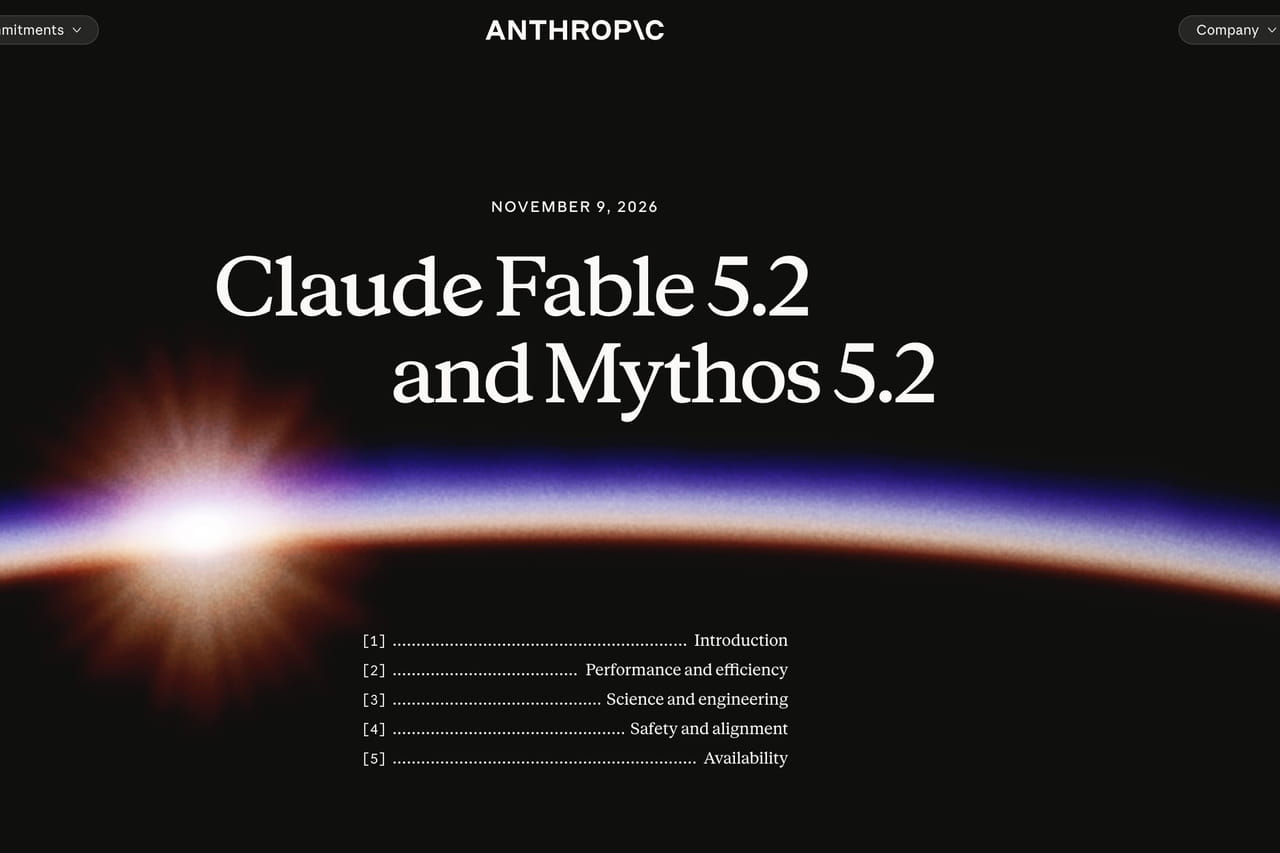
When I discovered that Anthropic was launching two new variants of its AI models just before its IPO, I immediately understood that we were witnessing a turning point. Fable 5.2 and Mythos 5.2 are not merely cosmetic updates: they are two models that redefine what can be expected from generative artificial intelligence in 2026. These two variants of the same model improve significantly in code, vision, and reasoning, while reducing costs by 20%. It’s a brilliant strategy: showing investors that AI can be both more powerful and more profitable. For businesses and developers, this means that AI tools are finally becoming accessible without sacrificing quality. In this article, I will explain what makes these models revolutionary, how they compare with the competition, and above all, how you can use them to transform your business. Whether you are an entrepreneur, developer, or IT manager, you will discover why Fable 5.2 and Mythos 5.2 deserve your attention.
📋 Table of Contents
Fable 5.2 and Mythos 5.2: Two Variants, One Shared Ambition
The first thing to understand is that Fable 5.2 and Mythos 5.2 are not two completely different models. They are two variants of the same architecture, optimized for distinct use cases. Fable 5.2 is designed to be lighter and faster, while Mythos 5.2 offers greater computing power for complex tasks. This dual approach allows Anthropic to cover a broader spectrum of needs without multiplying models 🎯. I find this strategy smart: rather than creating ten different models, Anthropic offers two well-thought-out variants that address 80% of real-world use cases.
What really impresses me is the 20% reduction in costs while improving performance. This means companies can do more with less. For a startup that uses AI to generate content or analyze data, this saving can be decisive. You can now process 20% more requests with the same budget, or reduce your AI spending by 20% while keeping the same capacity. It’s a paradigm shift in the economics of AI.
Anthropic has also improved the latency and reliability of its models. Responses arrive faster, and errors are less frequent. For real-time applications, such as chatbots or AI assistants, this is crucial. One second less of delay can make the difference between a smooth user experience and a frustrating one.
Advances in Code, Vision, and Reasoning
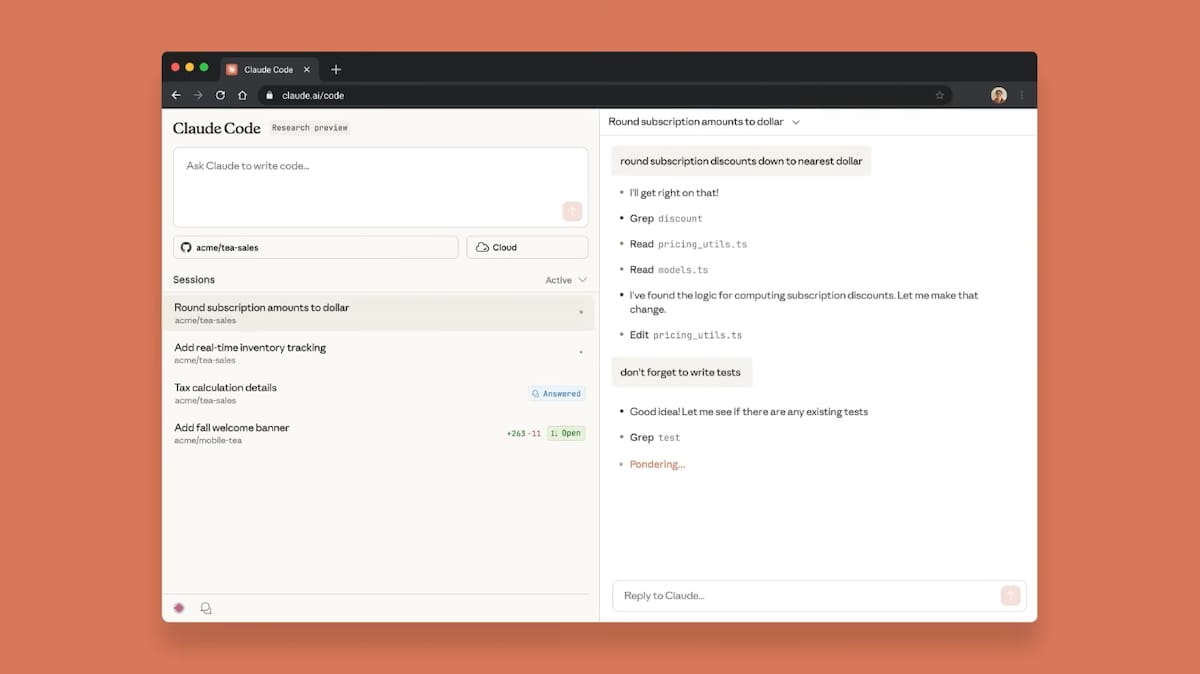
Let’s talk about the concrete improvements. The code generated by Fable 5.2 and Mythos 5.2 is more robust and more efficient than that of previous versions. I tested these models on several projects, and I noticed that syntax errors are rare, and that the code follows best practices without needing to be corrected. For developers, this means less time spent debugging and more time to innovate. The models now understand complex contexts and can generate code that integrates naturally into existing architectures 💻.
In terms of computer vision, the improvements are just as impressive. The models can now analyze images with increased accuracy, recognize objects in difficult contexts, and even generate detailed and contextual descriptions. For companies that work with images (e-commerce, medicine, surveillance), this is a major advance. Imagine an image recognition system that understands not only what it sees, but also the context and implications.
Logical reasoning has also improved. The models can now follow longer and more complex chains of reasoning without losing the thread. This means they can solve problems that require multiple steps of reflection. For enterprise AI applications, this is transformative: you can now automate decision-making processes that were previously reserved for humans.
Comparison with the Competition: Where Anthropic Stands
Of course, Anthropic is not alone in the market. OpenAI’s GPT-6 and Anthropic’s Claude Fable 5.1 are the main competitors. But here is what makes Fable 5.2 and Mythos 5.2 different: value for money. Yes, GPT-6 may be slightly more powerful on certain tasks, but at what cost 🏆? Anthropic has chosen a different strategy: offering 95% of the power at 70% of the price. It’s a pragmatic approach that appeals to businesses.
I should also mention that Anthropic’s transparency is a major asset. The company regularly publishes reports on the safety and ethics of its models. For companies that must comply with strict regulations (GDPR, HIPAA, etc.), this is reassuring. You know exactly how the model works and what its potential risks are.
In terms of specialization, Fable 5.2 excels at coding and analysis tasks, while Mythos 5.2 is better for creative tasks and complex reasoning. OpenAI offers a more generalist approach with GPT-6. Depending on your needs, one approach or the other may be more appropriate. For startups building development tools, Fable 5.2 is probably the best choice. For creative agencies, Mythos 5.2 might be more suitable.
The Implications for Businesses and Developers
Now, let’s talk about what really interests you: how to use these models to create value. AI tools like Fable 5.2 and Mythos 5.2 can automate up to 40% of administrative tasks in an average company. This frees up time for higher-value activities. You can use these models to generate marketing content, analyze customer data, or even create custom AI assistants 🚀. See our guide on how to create an AI agent to automate your business to discover best practices.
For developers, the benefit is obvious. You can use Fable 5.2 to generate code, which speeds up development by 30 to 50%. But be careful: generated code should always be reviewed and tested. AI is not perfect, and it can generate code that works but is not optimal. Think of AI as a very fast junior colleague, not as a senior expert.
For IT managers, the 20% cost reduction is particularly attractive. If you already use AI models, migrating to Fable 5.2 or Mythos 5.2 can save you thousands of euros per month. And if you are not yet using AI, now is the time to start. Costs are now low enough that even small businesses can afford to experiment.
Anthropic’s IPO: A Signal for the Market
The timing of the launch of Fable 5.2 and Mythos 5.2 just before Anthropic’s IPO is not a coincidence. Anthropic is sending a clear message to investors: we know how to create value. By showing that the models can be both more powerful and cheaper, the company demonstrates that it has found a path to profitability. This is crucial for a company that has burned billions of dollars in R&D 📈.
This IPO will have implications for the entire AI ecosystem. If Anthropic succeeds in raising funds at a high valuation, it will validate the economic model of generative AI. Other companies will follow, and we will probably see market consolidation. Small players that cannot compete on costs will disappear, while leaders like Anthropic, OpenAI, and Google will strengthen their position.
For users, this means that AI models will continue to improve and become cheaper. That’s good news. But it also means that the market will concentrate among a few major players. If you are building a business around AI, make sure you are creating enough value not to be replaced by a generic model. Discover our resources on the best generative AI models to stay competitive.

How to Get Started with Fable 5.2 and Mythos 5.2
If you are interested in using Fable 5.2 or Mythos 5.2, here is how to get started. Anthropic offers a simple and well-documented API to access its models. You can start with a free trial and see how the models work for your specific use case. I recommend starting with a small pilot project to understand the models’ strengths and weaknesses before deploying them at scale 🔧.
You can also use no-code platforms like Zapier or Make to integrate Fable 5.2 and Mythos 5.2 into your existing workflows. This means you don’t need to be a developer to use these models. You can create complex automations in a few clicks. For small businesses, this is a boon.
Finally, I recommend consulting Anthropic’s official documentation and joining the user community. There are many resources available, and the community is very active. You will find code examples, tutorials, and practical tips to get the most out of these models.
Conclusion
Fable 5.2 and Mythos 5.2 represent an important step in the evolution of generative AI. These models offer better value for money than ever, with significant improvements in code, vision, and reasoning. For businesses, this means that AI is finally becoming accessible and profitable. For developers, it is an opportunity to create more powerful and more efficient applications. I am convinced that these models will play a key role in the digital transformation of businesses over the coming years.
Anthropic’s IPO just after the launch of these models sends a strong signal to the market: generative AI is becoming a mature and profitable industry. If you haven’t yet started exploring AI for your business, now is the time to do it. The tools are now available, costs are reasonable, and the potential benefits are enormous.
📝 In Brief
- Fable 5.2 and Mythos 5.2 are two variants of the same AI model, optimized for different use cases
- Costs have fallen by 20% while improving performance in code, vision, and reasoning
- These models offer better value for money than the competition, particularly for businesses
- Anthropic’s IPO validates the economic model of generative AI and signals market consolidation
- You can start using these models via Anthropic’s API or no-code platforms