In 2025, the landscape of digital marketing has evolved spectacularly, and social media has established itself as the central element of any successful marketing strategy. This transformation is no longer a trend but an absolute necessity for companies that wish to remain competitive. Consumers now spend the majority of their time online, navigating between different social platforms, consuming content, and interacting with brands. This reality forces marketing professionals to completely rethink their approach. Campaigns, conversations, collaborations, and even significant milestones for companies now live on social platforms. From podcasts cut and shared on YouTube, Instagram Reels, and TikTok, to global brand campaigns launched primarily on social media, every touchpoint returns to where audiences are already spending their time: online. This evolution revolves around three fundamental pillars that redefine modern marketing: the massive integration of artificial intelligence 🤖, the spectacular evolution of podcasting into multimedia formats, and the transformation of social ads into true smart digital billboards.
📋 Summary
[content h2]
Artificial Intelligence Revolutionizes Social Media
The integration of artificial intelligence into social media strategies represents one of the most significant transformations of 2025. According to the latest studies, 96% of professionals in social media now use AI tools in their daily workflows. This massive adoption reflects a fundamental shift in how we conceive and execute our marketing strategies.
The main use cases focus on content ideation and writing posts, captions, and ad copy. Tools like ChatGPT, Canva, and Gemini dominate the market, providing marketers with exponentially enhanced creative capabilities. However, more recent innovations such as image and video creation, performance measurement, and automation remain underutilized, indicating that more sophisticated AI tools are still in the early adoption phase.
A particularly fascinating aspect is that 60% of marketers claim that AI-generated content now matches or surpasses human-created posts in terms of performance. This statistic raises important questions about the future of content creation, but it also highlights the increasing effectiveness of these technologies. Despite this, more than a third of professionals do not track the performance of AI-generated content, leaving a critical gap between creation and measurement.
The most significant impact of this AI revolution lies in its ability to enable experimentation. 73% of respondents indicate that AI helps them experiment with new formats or strategies. This is where inspiration and action can meet, and of course, where data can support these initiatives. While AI has transformed daily workflows and execution speed, it cannot fully replace our unique voices online 🎤. This is where marketers can move beyond the initial hype of AI and examine generated content with a more critical eye.

Podcasting in the Age of Social Media
Podcasting has undergone a spectacular evolution that far exceeds the traditional audio format. In 2025, the top-ranked podcasts have evolved well beyond a simple audio medium to become rich and interactive multimedia experiences. Among the 100 top American podcasts analyzed, YouTube emerges as the undisputed leader, with 87% of podcasts publishing on this network, generating an impressive average engagement rate of 3.13%.
Instagram clearly positions itself as the second major player, with an average engagement rate of 2.08% and 5,517 interactions per post, which is 724% above the platform averages. This exceptional performance is largely explained by Reels, which account for nearly 80% of the podcast content shared on the platform. This statistic reveals a fundamental transformation: podcasts no longer thrive solely on audio but on social platforms where visual and interactive formats dominate.
The differentiation between these platforms is particularly interesting. While YouTube generates views and loyal engagement, Instagram offers raw and immediate interactions. YouTube attracts engaged audiences who want to watch and listen to long-form content, while Instagram fuels discovery through quick and shareable snippets. This complementarity creates an ecosystem where long content builds depth on YouTube, while short content generates awareness and creates buzz around the brand.
This evolution completely transforms the social media strategies for podcast creators and brands. It is no longer simply about producing quality audio content, but about creating a content ecosystem tailored to each platform. Visual snippets, impactful quotes, and highlight moments transformed into Reels become as important as the original episode. This multimedia approach allows podcasts to reach audiences who would never have discovered the content in its traditional audio format, significantly expanding their reach and impact 🚀.
Social Ads as New Billboards
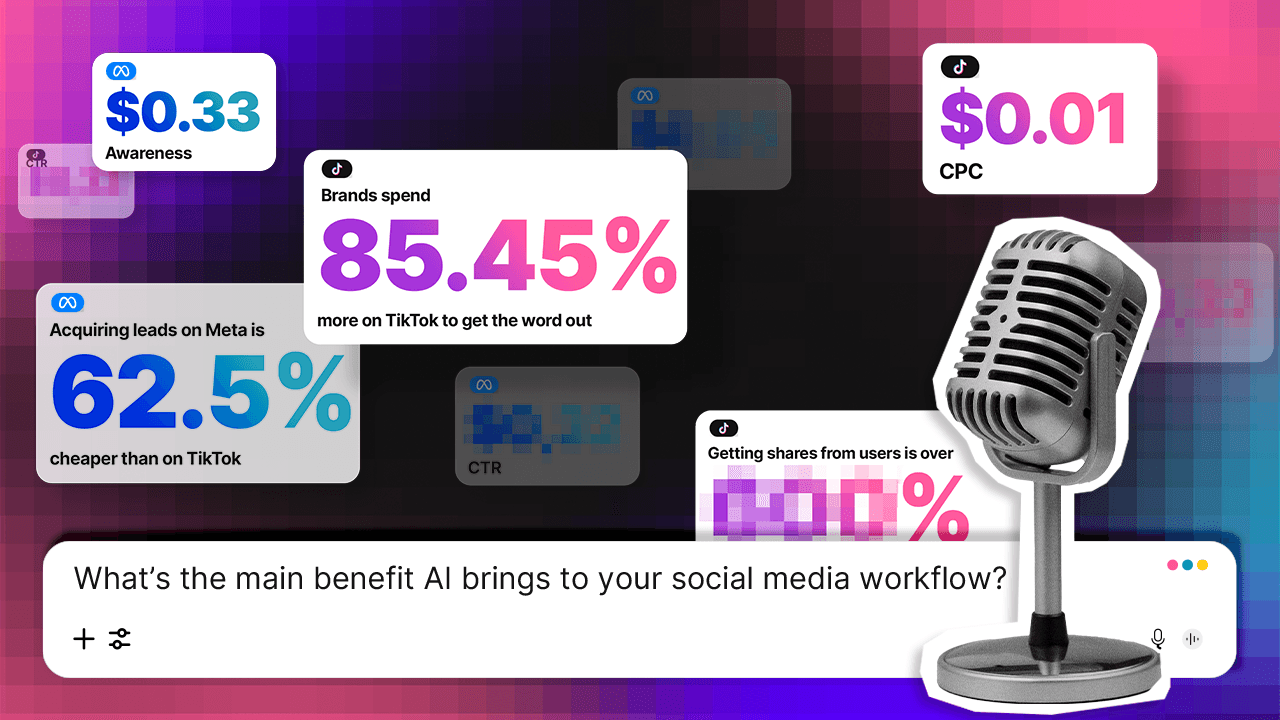
Social media ads have evolved to become the new billboards of modern marketing, but in a smarter, faster, and above all, more measurable version. This transformation is perfectly illustrated in the competition between TikTok and Meta, revealing fascinating dynamics in the digital customer journey. TikTok clearly establishes itself as the champion of discoverability, with brands investing 85% more in TikTok reach campaigns compared to other platforms.
In the middle of the conversion funnel, TikTok continues to outperform with impressive results. Its traffic campaigns deliver a click-through rate 94% higher than Meta, accounting for nearly 75% of TikTok’s conversions. This exceptional performance is explained by the naturally high engagement of users on the platform and ad formats that integrate seamlessly into the native user experience. TikTok’s short and engaging videos create an ideal environment for capturing attention and generating initial interest.
However, when it comes to finalizing sales, Meta remains indispensable and demonstrates its superiority in conversion. Its campaigns generate 61.3% of total conversions at a cost per action up to seven times cheaper than TikTok. This remarkable efficiency relies on years of optimization of targeting algorithms, deep knowledge of user purchasing behaviors, and sophisticated advertising tools that allow precise targeting of audiences ready to convert.
This distribution of roles perfectly reflects the preferences of Generation Z and younger audiences, particularly with the rise of influencer campaigns and user-generated content. It is not about strictly choosing between TikTok or Meta, but understanding the role each platform plays in the customer journey. An optimal strategy uses TikTok for discovery and interest generation 🎯, then Meta for conversion and retention. This complementary approach maximizes the effectiveness of every euro invested in digital advertising.
The Future of Social Marketing in 2025
The future of social media marketing in 2025 is shaped around an undeniable reality: success depends on our ability to meet audiences where they are, on social platforms, in video formats favored by younger audiences. This evolution is no longer an optional strategy but an absolute necessity for any company wishing to maintain its relevance and competitiveness. If it’s not social, it’s not part of today’s conversations or tomorrow’s future.
Emerging trends show a fascinating convergence between different technologies and marketing approaches. Artificial intelligence continues to refine, allowing for increasingly advanced personalization of content and interactions. Podcasts evolve into immersive experiences that blend audio, video, and real-time interactivity. Social ads become increasingly sophisticated, integrating elements of augmented reality and shopping experiences directly within the platforms.
The key to success lies in adopting a holistic approach that integrates these different elements in a coherent and strategic manner. Brands that succeed will be those that understand that each platform has its unique specifications and strengths, and who can adapt their content and message accordingly. It is no longer about duplicating the same content across all platforms, but about creating native and authentic experiences for each social environment.
Authenticity and transparency become fundamental values that consumers expect from brands. Audiences, particularly younger ones, develop a remarkable ability to detect artificial or inauthentic content. That’s why the integration of AI must be done thoughtfully, preserving that human dimension that creates emotional connection with the audience. Brands that master this balance between technological efficiency and human authenticity will be the ones that dominate the marketing landscape of 2025 and beyond. This approach requires a deep understanding of optimization techniques to maximize the impact of every interaction 📊.
Conclusion
After analyzing these major transformations in social media marketing, I am convinced that we are witnessing a revolution that far exceeds mere technological trends. The integration of artificial intelligence, the evolution of podcasting into multimedia formats, and the increasing sophistication of social ads create an entirely new marketing ecosystem. This transformation demands from us, marketing professionals, constant adaptation and a re-evaluation of our traditional practices.
I believe that the main challenge lies in our ability to maintain authenticity and human connection at the heart of these technological innovations. While AI offers us extraordinary possibilities for efficiency and personalization, it must never replace that emotional dimension that makes the strength of the best marketing campaigns. The future belongs to brands that can combine artificial intelligence with emotional intelligence, creating experiences that are both high-performing and deeply human.
In 2025, social media is no longer just a communication channel among others; it has become the beating heart of any successful marketing strategy. Companies that understand this and invest in this transformation will be the ones that thrive in the years to come. The future of marketing is social, interactive, and resolutely focused on innovation 🚀.