Since the launch of AI Overviews by Google, I have noticed that the landscape of SEO is transforming at a dizzying pace. These AI-generated summaries that appear at the top of search results have created a real shockwave in the industry. A recent study by Define Media Group, based on the analysis of 64 editorial sites, reveals staggering figures: a 42% drop in organic traffic since the massive rollout of this feature. Yet, at the heart of this storm, I observe a fascinating trend that completely reshapes our content strategies. Hot news content is up by 103%, while Google Discover is establishing itself as the new essential growth engine. This apparent paradox actually hides a major opportunity for publishers and content creators who can adapt. In this article, I propose to dissect this data, understand the underlying mechanisms, and present concrete strategies to not only survive but thrive in this new digital environment.
📋 Summary
The Devastating Impact of AI Overviews on Organic Traffic
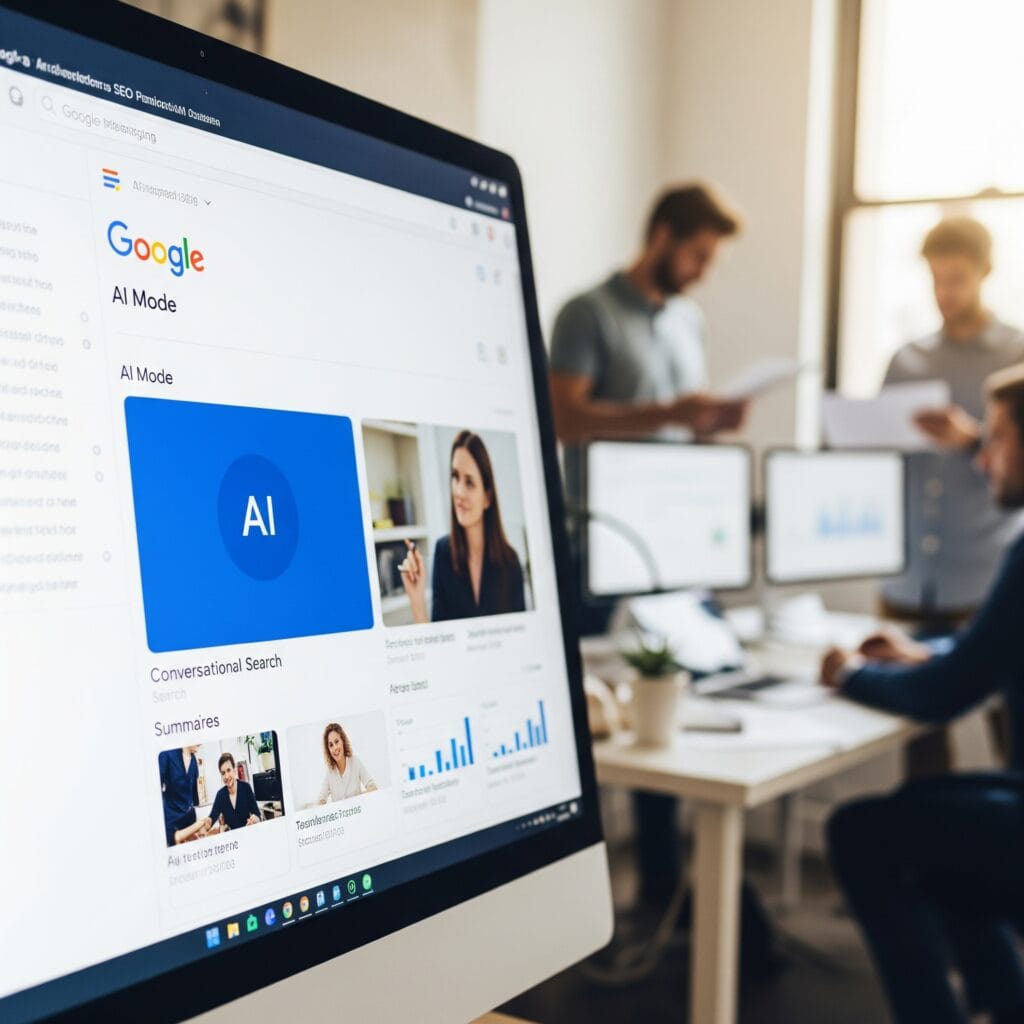
Before the rollout of AI Overviews, the analyzed sites recorded an average of 1.7 billion organic clicks per quarter. From the initial launch, traffic dropped by 16%, and this decline has never been compensated. What I found particularly revealing is the acceleration of this negative trend starting in May 2025, when Google decided to massively expand the feature to over 200 countries. The AI Overviews were then activated on a much broader spectrum of queries, radically transforming user behavior towards search results.
The data shows that every quarter since this expansion, organic clicks have declined further. In the fourth quarter of 2025, we observe a cumulative drop of 42% compared to the pre-AI Overviews average. This is a chilling figure for traditional publishers. However, I must emphasize that this impact is not uniform across sectors. Informational content and “evergreen” practical guides are the most exposed, with a 40% drop. AI Overviews appear on about 15% of news-related queries, which is three times less than in fields like health or science. 📉 This sectoral disparity is crucial for understanding where to focus our efforts.
What particularly interests me is understanding why Google chose to deploy AI Overviews so aggressively. The answer likely lies in Google’s desire to keep users on its search platform longer. By providing direct and synthesized answers, Google reduces the need to click through to external sites. Traditional publishers thus find themselves facing a dilemma: how to remain visible when the platform that indexes them systematically bypasses them?
Hot News: The Big Winner of This Revolution
Here’s the fascinating twist in this story: while evergreen content is collapsing, hot news content is literally exploding. Between November 2024 and February 2026, I observe a 103% increase across all Google surfaces, including Search, Discover, and Google News. This is a rise that defies the apparent logic of AI Overviews. How can we explain this phenomenon? The answer lies in how Google specifically handles news-related queries. When a user searches for an ongoing event – a geopolitical conflict, a natural disaster, an election – Google displays a “Top Stories” carousel at the top of the results. This carousel features visual thumbnails linking directly to media articles, bypassing a summary generated by artificial intelligence. 🔥
For now, this carousel remains one of the few spaces on the Google results page that is spared from AI Overviews. Define Media Group offers several interesting hypotheses to explain this differentiated treatment. First, news events evolve too quickly for AI models to generate reliable summaries in real-time. Second, the stakes of accuracy are exponentially higher for hot news, where a hallucination would be immediately visible and could have major reputational consequences. Third, Google may be seeking to protect itself from reputational risks associated with inaccurate summaries on sensitive topics. These three combined factors create a unique window of opportunity for publishers specializing in news.
What I find particularly interesting is that this trend creates a new hierarchy of content. Publishers who can quickly react to news events benefit from increased visibility, while those focusing on timeless content see their traffic erode. This dynamic forces newsrooms to completely rethink their editorial strategy. It is no longer just about producing quality content, but about producing relevant and timely content that escapes the filters of AI Overviews. This is a fundamental shift in how SEO is conceived.
Google Discover: The New Growth Engine for Publishers
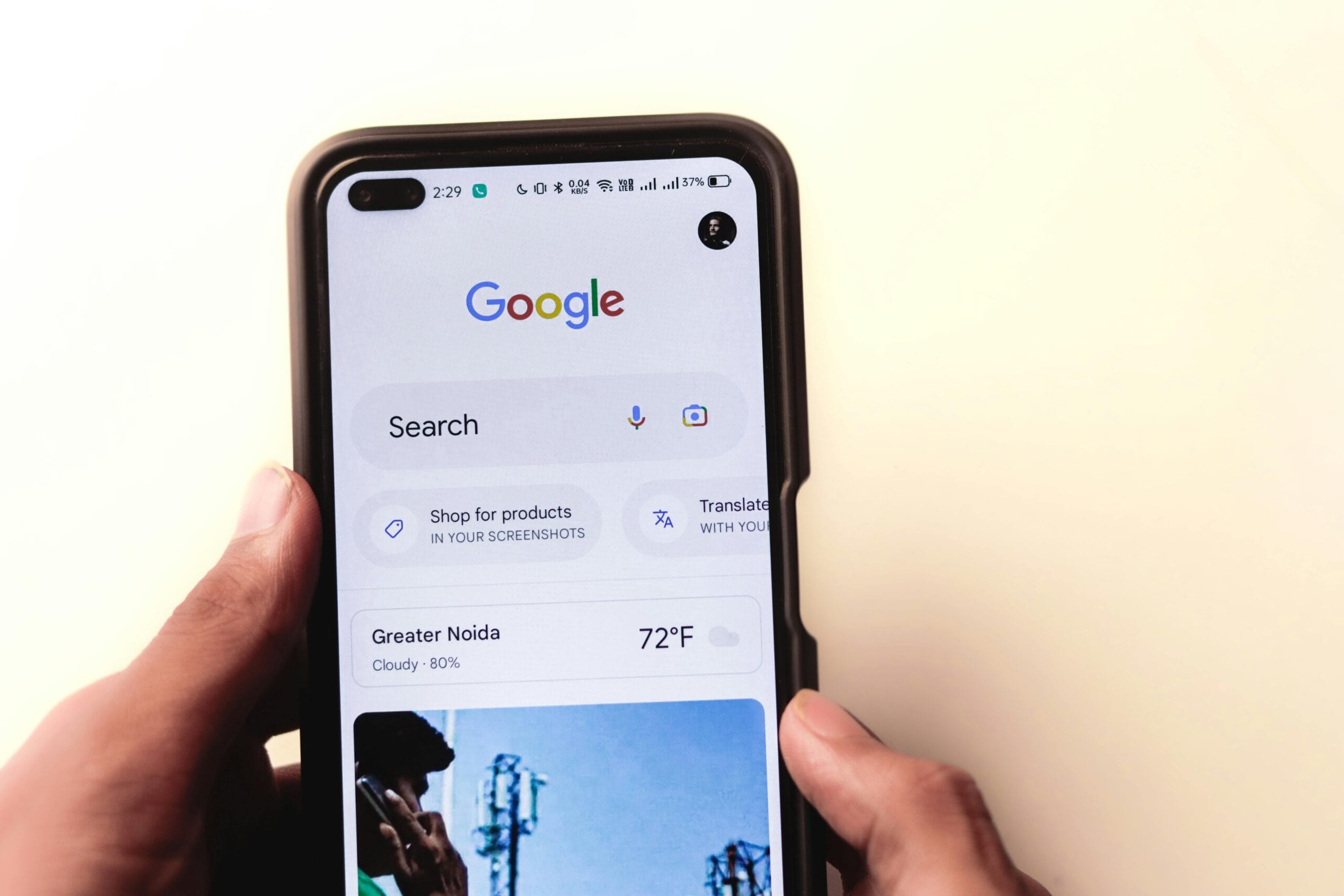
While “breaking news” remains stable in traditional Search with a relative increase (+2%), it is Google Discover that carries most of the growth. The flow of personalized content has increased by 30% in the studied panel. For the first time in the history of Define Media Group, Discover and traditional Search now send an equivalent volume of traffic. This is a major turning point that I consider one of the most significant transformations in the digital landscape in 2026. Google Discover, this content recommendation platform based on user interests and behavior, is becoming equal to the traditional search engine. 📱
Segmenting by content type, the study reveals that nearly all of the growth in hot news comes from Discover. This growth saw a marked acceleration after the Core Update in December 2025. Part of these gains was corrected by the first Core Update specific to Discover, released by Google in February 2026, but news traffic via Discover remains twice its level before December 2025. What interests me is that Discover operates under completely different rules than traditional search. The recommendation algorithms of Discover prioritize engagement, content freshness, and personalized relevance over traditional SEO signals like backlinks or keywords.
These results echo a trend already documented in France. The APIG barometer published in March 2025 showed that Discover had become the primary source of traffic for French media, with a 48.8% increase in 2024. In December 2024, out of 820 million clicks recorded by French publishers, 569 million came from Discover, compared to 189 million from Search. These figures illustrate the magnitude of the change. For publishers, this means that they now need to optimize not only for Search but also for Discover. Strategies for personalized content and engagement are becoming as important as traditional technical optimization. This is a Copernican revolution in how we think about SEO.
Concrete Strategies to Adapt Your SEO
In light of these transformations, I propose a strategic approach in three pillars. First, rethink your editorial calendar. Instead of focusing solely on evergreen content, I recommend creating a hybrid structure: 60% timeless content optimized for traditional search, 40% news and trend content optimized for Discover. This distribution allows you to benefit from both growth engines. News content should be produced quickly, with sufficient quality to engage readers, but without necessarily achieving traditional SEO perfection. 🎯
Second, optimize your content for Discover rather than for AI Overviews. This means creating catchy titles, high-quality images, and engaging descriptions. Discover functions like a content social network: the algorithm rewards engagement, shares, and comments. Use striking visuals that stand out in the Discover feed. Images should be high resolution, with bright colors and a clearly identifiable subject. Titles should be intriguing without being misleading – it’s a delicate but crucial balance. Check out our guides on modern SEO strategies to understand how to adapt your approach.
Third, invest in data analysis. Use the best analytics tools to understand where your traffic comes from and how it behaves. Google Search Console and Google Analytics 4 should become your daily companions. Segment your traffic by source (Search vs Discover) and analyze the performance of each type of content. This data-driven approach will allow you to quickly adjust your strategy based on actual results. To deepen your understanding of the impact of AI on SEO, I recommend consulting our specialized resources.
Conclusion
In conclusion, I must say that AI Overviews are not the end of SEO, but rather the beginning of a new era. Yes, traditional organic traffic has decreased by 42%, but this decline comes with a major redistribution of opportunities. News content is thriving, Google Discover is becoming a growth engine equivalent to traditional Search, and publishers who adapt quickly are reaping the benefits. The key message is simple: flexibility and adaptability are now more important than ever.
To succeed in this new environment, you must adopt a mindset of constant experimentation. Test different content formats, analyze the results, and adjust your strategy accordingly. Publishers who remain stuck in their old approaches will see their traffic continue to decline, while those who embrace this transformation will discover new sources of growth. SEO is not dead – it has simply changed form. And for those who can navigate this change, the opportunities are immense.
📝 In Brief
- AI Overviews have reduced organic traffic by 42% since their massive rollout in May 2025
- Hot news content has increased by 103%, creating a new opportunity for responsive publishers
- Google Discover has become equal to traditional Search in traffic volume, with a 30% growth
- A hybrid strategy combining evergreen content and news, optimized for Discover, is essential for thriving