(Image generated by Gemini 2.0)
For a few months now, a new trend has been shaking up the software development world: vibe coding. Popularized by Andrej Karpathy, former researcher at OpenAI and Tesla, this concept promises to revolutionize programming by allowing anyone to create applications simply by conversing with an artificial intelligence. But behind the hype and enticing promises, a crucial question arises: does vibe coding really deliver on its promises? Is it a major technological advancement or just a passing fad, like NFTs or no-code?
What is Vibe Coding? Definition and Principles
AI-Guided Programming
Vibe coding, literally “coding in the vibe,” is based on an innovative principle: using generative AI to produce functional code from simple natural language descriptions.
Unlike traditional methods where the developer manually writes each line of code, the vibe coder follows a radically different approach. They start by formulating a detailed request, for example: “Create a REST API in Python that registers users in a MongoDB database.” The AI, through specialized tools, then automatically generates the corresponding code. The user only needs to test the result and refine it if necessary.
Essential Tools for the Vibe Coder
Several platforms have established themselves as references in this emerging ecosystem.
Cursor stands out as a next-generation code editor, specially optimized to work with AI. It not only allows code generation through an integrated chat but also enables modification and debugging in a conversational manner.
GitHub Copilot, developed by Microsoft in collaboration with OpenAI, has become an indispensable assistant. Directly integrated into VS Code, it suggests code in real-time as the developer types, even learning to recognize patterns specific to each project.
ChatGPT-4, although more generalist, shows impressive capabilities for generating complete scripts in various languages like Python, JavaScript, or SQL. Its versatility makes it a popular tool for ad-hoc tasks.
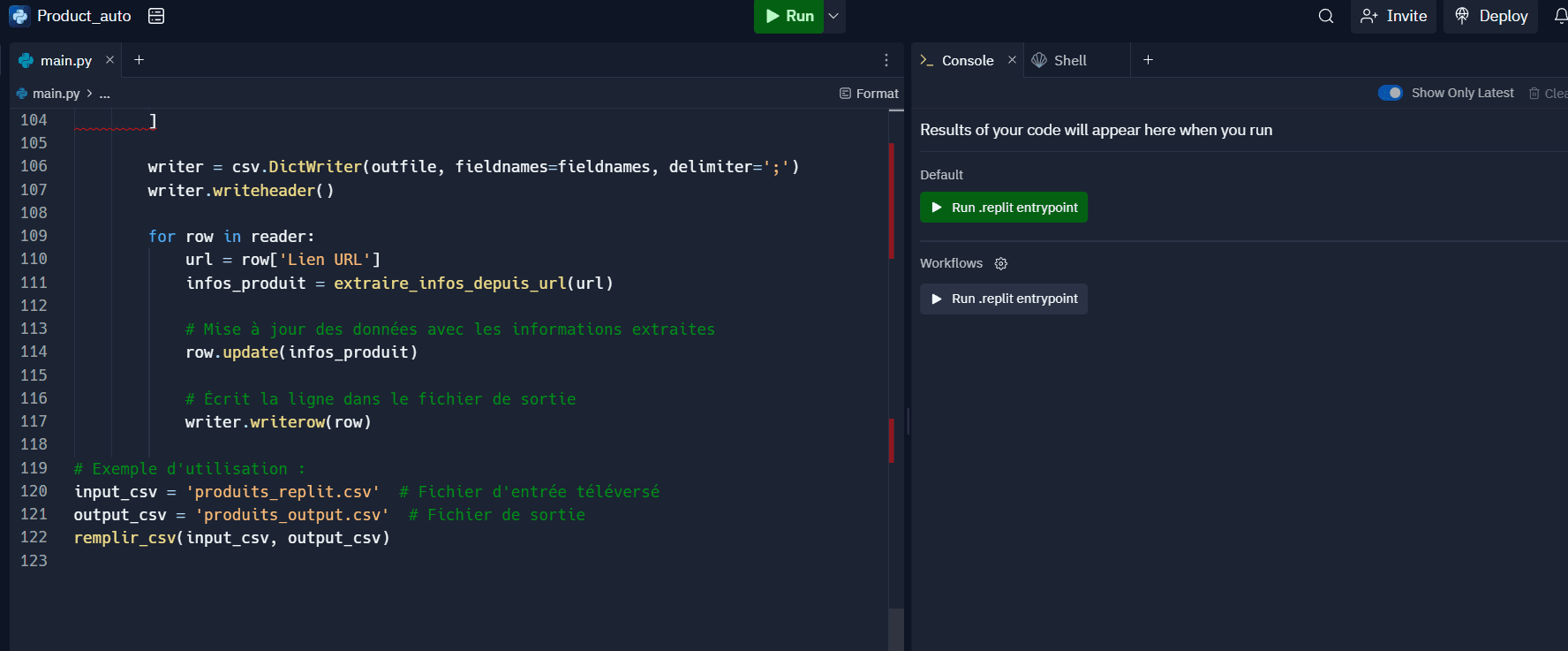
Finally, Replit AI offers a complete cloud development environment with integrated AI, particularly suited for beginners or collaborative projects. Not being technical by nature, I use this tool to create and run Python scripts.
User Profiles
Three main categories seem to adopt this new approach.
Experienced developers mainly see it as a way to speed up repetitive or tedious tasks, such as creating boilerplates or writing unit tests.
Startup founders and entrepreneurs appreciate the ability to quickly prototype without having to immediately hire a technical team. This allows them to validate concepts before making significant investments in development.
Finally, hobbyists and non-technical profiles are attracted by the promise of being able to bring ideas to life without having to master the intricacies of programming.
The Benefits of Vibe Coding: Why is it Appealing?
An Unprecedented Productivity Gain
Recent studies confirm the significant impact of these tools on developer productivity. According to a survey conducted by GitHub, regular users of Copilot report an average increase of 55% in their coding speed.
Specifically, where developing a basic web application (with frontend and backend) could take two weeks for a solo developer, vibe coding now allows for a functional prototype to be obtained in just a few hours.
Revolutionary Accessibility
This technology could mark a turning point in the democratization of software creation.
Take the example of a digital marketer who wants to automate the SEO analysis of their site. Previously, they would have had to either learn to program or hire a developer. Today, by precisely describing their needs to an AI, they can obtain a customized script in just a few attempts.
Similarly, a teacher could generate an interactive quiz application for their students without writing a single line of code. A small business owner could set up a basic e-commerce site without hiring a web agency.
Cost Reduction for Young Companies
For startups in the launch phase, the economic benefits are particularly notable.
They can thus delay hiring a CTO or a full technical team, significantly reducing their burn rate. Vibe coding allows for rapid testing of different ideas and iterations before investing in more robust development.
Some entrepreneurs report being able to develop convincing MVPs (Minimum Viable Products) with minimal budgets, which was unthinkable just two years ago.
The Limits and Dangers of Vibe Coding
The Hallucination Problem
Despite their impressive performance, generative AI models still suffer from major limitations.
The phenomenon of “hallucination”, where the AI invents plausible but incorrect solutions, poses a real risk. A striking example concerns security: it is not uncommon for these systems to propose vulnerable password hashing functions or dangerous cryptographic implementations.
Without technical expertise to audit the generated code, users could deploy applications with critical flaws without even being aware of it.
Maintenance and Scalability
The quality of the automatically produced code raises other concerns.
The generated solutions often lack adequate documentation, use variable conventions, and sometimes integrate problematic software dependencies.
In practice, this can result in applications that work correctly at launch but become quickly unmanageable when it comes to adding features or fixing complex bugs.
Impact on the Profession
Some observers are concerned about the long-term consequences for the developer profession.
There is a real risk of devaluation of fundamental skills, with the emergence of a generation of “superficial coders” capable of quickly producing functional code but unable to understand or optimize complex systems.
Junior roles could be particularly affected, as many entry-level tasks (such as implementing basic CRUD) are now automatable.
Conclusion: Between Opportunity and Vigilance
Vibe coding undeniably represents a major advancement in the evolution of development practices. Its benefits in terms of productivity and accessibility are real and measurable. However, its technical limitations and the risks associated with naive use necessitate a balanced approach. In the coming years, we anticipate that this technology will become a standard tool in the toolbox of professional developers, but it will not replace fundamental skills. The key will lie in the ability to intelligently integrate these new tools while maintaining high standards of quality, security, and maintainability.